Monday, October 02, 2006

National Center for Soybean Biotechnology Expands With Soybean Genome Mapping Facility

Today the Missouri Soybean Association (MSA) applauded the opening of the Soybean Genome Mapping Facility, an expansion of the National Center for Soybean Biotechnology (NCSB) at the University of Missouri (MU) in Columbia, Mo. NCSB scientists play a national leadership role in developing improved soybean varieties to keep U.S. producers competitive in the marketplace.
“This facility is instrumental in helping Missouri soybean producers develop improved soybean varieties,” said Dale R. Ludwig, MSA executive director/CEO. “Through funding supported by U.S. Senators Kit Bond and Jim Talent, Missouri remains ahead of the class in life science research.”
Renovations supported by Bond and the MU College of Agriculture, Food and Natural Resources gave $2 million toward the crop genomics laboratories in the Agriculture Building. Also, a National Science Foundation grant and matching funds program provided more than $1 million for genome mapping equipment.
The University of Missouri-Columbia was recently designated by U.S. Congress as the site for the NCSB. Its foundation was the Center for Soybean Genomics and Biotechnology, previously formed at MU in support of interdisciplinary research on the genomic structure and function of soybean genes. The ultimate goal of the NCSB is to provide innovative molecular approaches that can be applied toward soybean improvement.
The NCSB is a collaborative program among scientists at MU, the U.S. Department of Agriculture’s Agricultural Research Service Plant Genetics Unit in Columbia and the Donald Danforth Plant Science Center in St. Louis, Mo. There are currently more than 25 researchers working together from diverse fields including agronomy, microbiology and plant pathology, biochemistry, animal science, food science, molecular biology and agricultural economics.
In addition to receiving the NCSB support, scientists working in the center continue to be highly competitive for other funding from a variety of sources, including the Missouri Soybean Merchandising Council, federal agencies and private industry.
Strategically located in the heart of the nation, the NCSB aims to foster research partnerships with institutions in the Midwestern and Southern states, regions where soybeans are a major crop. Research within the NCSB focuses on major problems that affect soybean production and use. The Center also provides educational opportunities for students and outreach services to producers, public agencies and consumers.

Kansas Soybean Update: Kenlon Johannes

The Kansas Soybean Association has been involved in talks with Wal-Mart about the possibility of using biodiesel in their truck fleet. Kenlon Johannes, Executive Director of the Kansas Soybean Association, joins us for this week's update.

Saturday, September 30, 2006

Saturday Farm Feature: Mike Hergert

It's harvest time in North Dakota, where Mike Hergert is a farm broadcaster at the Red River Farm Network. Mike gives us an update as to how this growing season has stacked up for producers. Mike tells us about the benefits they're seeing from adequate subsoil moisture and explains North Dakota's beet harvest.
On a lighter note, Mike shares his experience running and how he's preparing for the Marine Corp Marathon in Washington, DC next month.

Wednesday, September 27, 2006

Missouri Soybean Update: JP Dunn

JP Dunn, Manager of Field Services for the Missouri Soybean Association, gives us this week's Missouri Soybean Update. JP has more information about Paseo Biofuels, a new farmer-investor group that has partnered with Cargill's Soybean Processing facility in Kansas City to build a new 40 million gallon biodiesel facility.

Tuesday, September 26, 2006

Iraqi Palm Dates Making a Renaissance Revival

(Baqubah, Iraq) - The date palm tree has long been the cherished symbol of Iraq. Dates are the second largest export after oil.
During the 1950s, Iraq’s palm orchards produced more than 600 varieties of dates and, by some estimates, accounted for nearly 80% of the world’s supply. During the country’s golden era there were more than 30 million fruit producing trees.

But wars, neglect, improper drainage, and the scurvy of the dreaded Dobas bug left the industry in shambles.

Particularly hard hit was southern Iraq where 16 million date palm trees were cut down, burned and transformed into battlefields during the Iran-Iraq was in the 1980s.

The U.S. Agency for International Development (USAID) stepped in last spring and distributed 4,800 date palm offshoots that will produce commercially valuable dates. The offshoots were given to 120 farmers in Muthanna, Basrah and the Basrah Marshlands, with technical assistance from USDA to ensure proper planting and cultivation.

In four years each farmer could realize a gross income boost of $7,000 per year.

The crop was facing another critical challenge - the pesky little Dobas bug which secretes a sticky liquid that interferes with the photosynthesis process.


This past May, Coalition partners and the Iraqi Department of Agriculture began an aggressive pesticide spraying campaign.

“We contracted Moldovan helicopters, painted them with Iraqi flag colors and outfitted the Moldovan pilots with Iraqi uniforms so we could safely treat thousands of acres of trees,” said Lieutenant Colonel Chris Johnson. The results have been astounding. After only one season of spraying, the date crop yield has increased by as much as 70%.

Baqubah was the venue for a mid-September dates festival where farmers, agriculture ministers and the public gathered to celebrate 84 varieties of a bountiful harvest.


Aboud Ahdim Abbas Mohammad, 56, is continuing a family date farming tradition that began in the 1880s.

“The spraying saved 75 of my trees and I’ve seen an 85% increase in date yields over last year’s harvest,” said Mohammad through a translator.

While grateful for the harvest, Mohammad is equally grateful for his life. Gunmen attacked him while he and his sons were harvesting. Thanks to a pistol that he keeps hidden in his traditional clothing he was able to fight his way to safety but not before taking a bullet to the arm.

Attending a visible festival might intimidate some farmers. But not Mohammad.

“Please take my picture. Tell them my name. This is my country and I will not be afraid.”

Photos and story by Paul McKellips, U.S. Department of State, Public Affairs GO Team, on assignment in Baqubah, Iraq.


Missouri Corn Update: Robyn Venn

Missouri Ethanol LLC celebrated their Grand Opening on yesterday with over 3000 people in attendence for tours and the festivities. Robyn Venn is plant manager of Missouri Ethanol and gives us a background on the plant, where the plant is going and the role Missouri Ethanol is plaing in their community.

Monday, September 25, 2006

Kansas Soybean Update: Dennis Hupe

Applications are currently being accepted for the DuPont Young Leader Program. Dennis Hupe with the Kansas Soybean Association is our guest for this week's update and tells listeners more about the program and how producers can apply or nominate an individual.

Saturday, September 23, 2006

Saturday Farm Feature: Michael Martin Murphy

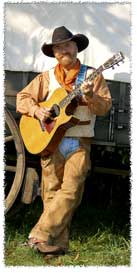
Cowboy Music singer and poet Michael Martin Murphy is coming to Southwest Iowa for a concert this Sunday to help S.C.O.R.E. (Spinal Cord Research and Enrichment). We had the opportunity to visit with Michael about his music, his cattle and horse ranch and how he connected with Brooke Turner to put together this fundraising event.

*Tickets are still available for the concert, starting at 7:00pm on Sunday evening at the Clarinda High School Gymnasium. Go to www.krazykowboy.com for more information.

Friday, September 22, 2006

New Water Treatment Plant Delivering Fresh Drinking Water to Major Iraqi Cities

(Ifraz, Iraq) - Iraq is drained by the Tigris-Euphrates river system, even though less than half of the entire basin lies within the country. Both rivers rise in the Armenian highlands of Turkey and are fed by melting snow.
The Great Zab River is a tributary to the Tigris and flows down through the high Zagros Mountains before joining the Tigris south of Mosul.
The Great Zab has been used for irrigation, flood control and hydroelectricity.
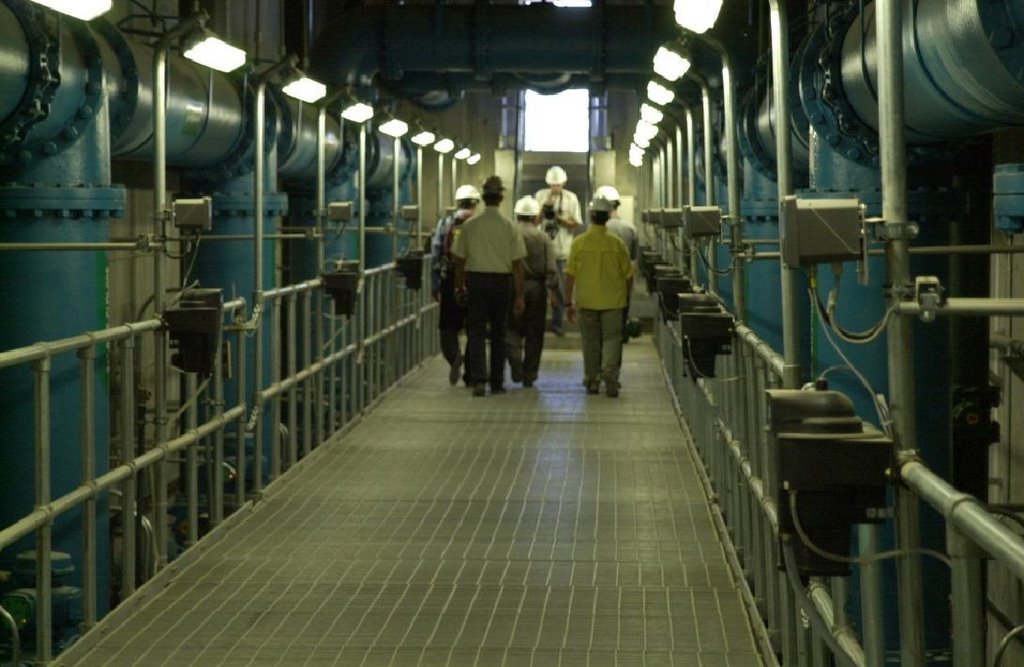
But now - thanks to an almost $200 million investment by the United States - the Great Zab is the site of a U.S. Army Corps of Engineers water treatment plant in Ifraz. The center is pumping fresh drinking water 20-miles southeast to the city of Erbil.
"Currently, the plant is pumping 4,000 cubic meters of potable drinking water per hour," said Nousak Raouff, who is a civil engineer and the project manager. "When the electrical grid is updated in January, we’ll be able to deliver 6,000 cubic meters per hour to the one million citizens in Erbil."
Two more clarifiers can be added as Erbil grows which would bring total capacity to 10,000 cubic meters per hour.

“Currently, the plant is pumping 4,000 cubic meters of potable drinking water per hour,” said Nousak Raouff, who is a civil engineer and the project manager. “When the electrical grid is updated in January, we’ll be able to deliver 6,000 cubic meters per hour to the one million citizens in Erbil.”
Two more clarifiers can be added as Erbil grows which would bring total capacity to 10,000 cubic meters per hour.
The plant pulls water from the Great Zab River into a tank where it is pumped through one of six giant, cylindrical, concrete clarifying tanks. The clarifiers remove heavy debris from the river. The water is then pushed through a filter of fine sand and charcoal. Chemicals are added to achieve optimum levels of pH and alkaline before being pumped through 20-miles of pipeline at 1.6 million gallons per hour to Erbil.

The water is fed to a 5.2 million gallon storage tank that sits high above - and 3 miles east of - Erbil in the village of Dawajin. Gravity then carries the water down into Erbil’s 54 sectors of network piping.
The collateral benefits of the water treatment plant are numerous. In addition to fresh potable drinking water the system is increasing water pressure at the tap which in turn reduces the potential for contamination.
Residents no longer have to wash their fruits, vegetables and meats in contaminated water. And since the old, historic wells can now be capped, the natural aquifer can be rejuvenated and used exclusively for Iraqi agriculture.

Photos and story by Paul McKellips, U.S. Department of State, Public Affairs GO Team, on assignment in Ifraz, Iraq.

Missouri Beef Update: David Dick

This week's MBIC report features Chairman David Dick of Sedalia who recently returned from the Beef Promotion Operating Committee meeting in Denver where the fiscal year '07 budget for the national beef checkoff was approved. Cindy Zimmerman has this week's Missouri Beef Udpate.

Missouri Farm Bureau Board of Directors Votes to Oppose Amendment #2

Based upon the policy adopted at the annual meeting of its membership, the Missouri Farm Bureau Board of Directors at its September meeting voted to oppose Constitutional Amendment #2, the so-called stem cell research and cures initiative.

The policy adopted by the Farm Bureau members at its last annual meeting reads as follows: “We are opposed to the cloning of human beings. We support adult stem cell research. We are opposed to the creation and use of human embryos or blastocysts for research purposes in which they are destroyed, discarded or knowingly subjected to risk of injury or death.”

Annually, the Missouri Farm Bureau spends almost six months in a process to determine its policy positions on a variety of issues. The process concludes with over 500 voting delegates, representing every county in the state, participating in Farm Bureau’s annual meeting in December.

Concerning the position taken by the Board of Directors on Amendment #2, Charlie Kruse, president of Missouri Farm Bureau, stated, “Stem cell research was discussed extensively by our membership during our policy development process. The 2006 policy adopted by our members clearly comes down on the side of opposing Constitutional Amendment #2.

“As discussed by our Board of Directors, Amendment #2 has important implications in the creation and protection of human life. Our members have great concern with the creation of human embryos that may then be destroyed in the name of science and research as allowed by Amendment #2. Our members are further concerned that the proposal may allow for human cloning.

“However, Missouri Farm Bureau policy supports adult stem cell research. This research has shown promise treating human illnesses and is allowed by state and federal laws. Amendment #2 is not needed to continue adult stem cell research.”

Thursday, September 21, 2006

House Agriculture Committee Passes Resolution Embracing New Energy Vision

WASHINGTON, D.C. — The House Committee on Agriculture today approved H. Con. Res. 424, which embraces a new national vision of meeting 25% of the nation’s energy needs from renewable sources by 2025.

The 25x’25 resolution has the support of a broad coalition including agriculture, industry, and environmental leaders, as well as governors, four state legislatures, over 80 co-sponsors in the House of Representatives, and 27 co-sponsors in the Senate.

“25x’25 is a bold energy vision for this nation,” said Read Smith, Co-Chair of the 25x’25 Steering Committee. “It has the support of Republicans, Democrats, industry, and environmental leaders – and the agriculture and forestry communities are at its heart. All of the 25x’25 partners have shown great leadership in helping to forge a new energy future.”

Lead sponsors include: Reps. Bob Goodlatte (R-Va.), Collin Peterson (D-Minn), Marilyn Musgrave (R-Colo.), Mark Udall (D-Colo.), Frank Lucas (R-Okla.) and Earl Pomeroy (D-N.D.); and Sens. Charles Grassley (R-Iowa), Ken Salazar (D-Colo.), Dick Lugar (R-Ind.) and Tom Harkin (D-Iowa).

Over the last two years, support has been building for the 25x’25 initiative, which would tap renewable energy sources such as wind, solar and biofuels. More than 275 organizations have endorsed the vision, along with 18 governors, including: Governors Jeb Bush (R-Fla.),
Mitch Daniels (R-Ind.), Jim Douglas (R-Vt.), Jim Doyle (D-Wis.), Robert Ehrlich (R-Md.), Ernie Fletcher, (R-Ky.), Jennifer Granholm (D-Mich.), Dave Heineman (R-Neb.), Tim Kaine (D-Va.), John Lynch, (D-N.H.), George Pataki (R-N.Y.), Tim Pawlenty (R-Minn.), Ed Rendell (D-Pa.), James Risch (R-Idaho), Brian Schweitzer (D-Mont.), Kathleen Sebelius (D-Kan.), Bob Taft (R-Ohio), and Tom Vilsack (D-Iowa).

“Today’s vote is a powerful endorsement of renewable energy, and we commend the leaders on the House Agriculture Committee who supported this vision,” said Reid Detchon, Executive Director of the Energy Future Coalition, which works with 25x’25. “Setting the goal of 25x’25 is the critical first step in moving us toward an America that is more secure, more environmentally stable, and energy self-sufficient.”

Several members of the Agriculture Committee expressed support for the passage of H. Con. Res. 424:

* Rep. Bob Goodlatte, Chair of the Agriculture Committee, said, "I am pleased that the Committee today passed the 25x'25 initiative. Increased development of renewable fuels opens new markets for our nation's producers, provides consumers with a safe, sustainable, environmentally friendly, and renewable source of energy, and decreases our nation's dependency on foreign oil thereby likely lessening the negative effects of severe spikes in oil prices on consumers. The Committee will continue to work to ensure that a number of opportunities are explored to ensure that we can turn the 25x'25 goal into a reality."

* Rep. Collin Peterson (D-Minn.), Ranking Member of the Agriculture Committee, said, "Today the Agriculture Committee recognized the importance of expanding the production and use of renewable energy sources by passing the 25 by 25 resolution. This is an important priority, not just for agriculture, but for the entire country as we pursue energy independence."

* Rep. Stephanie Herseth (D-S.D.), member of the Agriculture Committee and Co-chair of the House Rural Working Group, said, "Renewable fuels like ethanol and biodiesel are the key to reducing our dependence on foreign oil, strengthening our national security and revitalizing rural American economies. With the 25x‘25 initiative we are setting an ambitious, achievable and necessary goal that will be critical to our national energy needs in the future. I'm particularly supportive of investment in research to continue to develop groundbreaking technologies that increase the efficiency of the process."

Beef and Forage Reports Set for MU Field Day in Columbia

Beef and forage producers will hear and see researchresults in 17 demonstrations throughout a beef field day, Oct. 7, at theUniversity of Missouri South Farm.
"These are ideas that farmers can take home and use," said Monty Kerley,MU professor of beef nutrition. Major discussion areas are beefreproduction and nutrition, and agronomy.
The field day features present research and extension programs, Kerleysaid. There also will be a look ahead to new research at the beef farm,officially known as the MU Beef Research and Teaching Farm.
"Farm buildings, feedlots and grazing paddocks are being upgraded toallow us to do new things," Kerley said.
MU students and their professors will begin demonstrations at 9:00 a.m.,running through 4:30 p.m. Registration opens at 8 a.m.; coffee anddoughnuts will be served.
Ten demonstrations on beef feeding include forage management forefficient cows, feed-bunk management, use of ethanol byproduct feedssuch as dried distillers grains (DDGS), and optimal levels of DDGS forcalves on tall fescue pastures.
In the forage agronomy section, Rob Kallenbach, MU Extension specialist,will lead pasture walks on the new grazing paddock system. Researchersare working to provide year-round grazing for the beef herd. They alsowill tell about pasture weed management, forage systems for stockercalves and Roundup Ready alfalfa.
In beef management, producers can see "inside" a calf's body withultrasound devices used to study carcass composition.
MU geneticists will talk about the role of cattle disposition and on theimportance EPDs (expected progeny differences) in sire selection.
New methods of synchronized breeding in herds will be discussed anddemonstrated by David Patterson, MU Extension beef reproductionspecialist. His team developed methods to breed all cows in a herd onone day.
Patterson's group will tell how to join the Show-Me Select Heiferprogram that develops replacement heifers with improved genetics. Theywill share new methods of synchronized breeding of heifers developed aspart of the Show-Me Select project.
Guest speakers at noon will include Mike John, Huntsville, Mo., rancherand president of the National Cattlemen's Beef Association. He willbring industry updates.
Fred Ferrell, director of the Missouri Department of Agriculture, willtell of the importance of the beef industry to the state's economy. Healso will discuss the state's programs for quality systems assessment(QSA) and for Missouri-branded beef.
MDA officials will have a booth to register premise identifications forthe federal disease tracking program.
Ron Plain, MU livestock economist, will give a beef price outlook.
There will be drawings for door prizes during the free luncheon. Peopleplanning to attend the lunch are asked to make reservations by callingJudy Burton at 573-882-7327.
"The MU beef farm is easy to see, but somewhat difficult to reach," saidPhillip Brooks, MU farm manager. The farm is just north of the KOMU-TVtower, near U. S. Highway 63 south of Columbia. Turn east on Old MillersRoad, just south of the TV station. "The landmark for the turn is theweather radar dome," Brooks said.
"Come see us, but be careful crossing the busy four-lane highway."

The name is changing, the values aren't - Farm Credit Services of Missouri is now FCS Financial

Farm Credit Services of Missouri, an organization that counts 90 years of proven expertise in rural financing, has changed its name to FCS Financial. This change will provide additional service offerings, but will not change the strong, enduring values of the organization.
"We've realigned our brand to better serve the needs of our customers on the basis of three areas: the changing rural marketplace…the competition…and the future of the industry, " says Daryl Oldvader, Chief Executive Officer of FCS Financial. "We're not moving away from ag lending, in fact, we remain fully committed to this area upon which our organization was built. We've recognized the marketplace changes and are expanding our services to reach a quickly growing new segment, while remaining focused on rural Missouri."
According to Oldvader, the name change was initiated in response to rural Missouri dynamics:
The 2002 Census of Agriculture showed a decrease in the number of traditional/full-time farmers. Unlike that group, non-traditional/part-time farmers or "rural lifestylers" are on the rise. Given this shift in the rural landscape and the corresponding change in customer needs, FCS Financial realized the need for additional financial service offerings.
Through research, FCS Financial learned that the "Farm" in their name was seen as excluding individuals who sought land in rural Missouri. By repositioning the brand identity, there is more concentration on the service offerings FCS Financial provides.
To increase brand strength and viability in the marketplace, FCS Financial has expanded its services and created two sub-brands: Ag & Business and Land & Home. The Ag & Business sub-brand will continue to focus on customers whose needs involve agriculture and agribusiness. This includes farm real estate purchases; operating expenses; equipment, machinery, and livestock loans; and risk management tools such as crop insurance, livestock risk protection insurance and life insurance. The Land & Home sub-brand will reach out to customers seeking loans for rural homes, investment properties or lots and acreages; insurance products; and equity lines of credit. Additional financial products round out the offerings along with an acute knowledge of the rural marketplace held by FCS Financial employees.
"Both customer segments represented through the sub-brands are extremely relevant and viable to Missouri Agriculture," noted Oldvader.
As for current FCS Financial customers, there will be no changes to interest rates, contract agreements or terms of service.
Oldvader concludes, "Through professionalism, integrity and expertise, we at FCS Financial offer our customers the best possible service and expertise available in the financial arena. And we will continue to fully serve all those living in rural Missouri."
FCS Financial was built on serving Missouri agriculture and is committed to delivering meaningful ideas and solutions that provide value to its customers. With the changing landscape, FCS Financial is now positioned to serve all those who want to enjoy the lifestyle that rural Missouri offers.

Ag News: Southeast Kansas Drought

While much of the KFEQ listening area has had a decent weather pattern this season, some areas of the Midwest have been affected by dry conditions. Gary Kilgore with Kansas State University Extension told me the wheat crop did well, but corn and soybean yields and pasture conditions have suffered.

Wednesday, September 20, 2006

Farm Futures Survey Shows Corn Plantings Could Reach Highest Level in More Than 50 Years

U.S. corn growers have yet to harvest their 2006 crop, but they are already thinking about a huge increase in plantings next spring, according to an exclusive survey by Farm Futures magazine. In fact, if early intentions for 2007 hold, farmers could devote the most acres to corn since before 1950.Lured by high prices already posted for 2007 corn, farmers say they’d like to plant 85 million or more acres of the crop. USDA says farmers planted 79.4 million acres of corn this year.Farm Futures surveyed more than 550 growers by email from August 24 to September 14, in the first nationwide attempt to gauge farmer plans for 2007. Farm Futures survey of corn intentions for 2006 proved the most accurate of those released prior to USDA’s March 31 prospective plantings report.According to the magazine’s latest survey, farmers said they would like to increase corn acreage by 7% to as much as 9% next spring. That means plantings could reach from 85 million to as high as 86.6 million acres, says Senior Editor Bryce Knorr, who directed the survey.“Obviously, producers have a long time to change their minds, but this is an indication that farmers are hearing bullish talk for 2007 loud and clear,” says Knorr.Farm Futures Market Analyst Arlan Suderman isn’t surprised by the big jump in farmer planting intentions.“While that may seem like a lot of corn, exploding demand for ethanol during the 2007 crop year could require that much additional production to keep stocks from falling dramatically,” Suderman said.Strong wheat prices for 2007 are also like to encourage farmers to plant more of that crop, according to the Farm Futures survey. Seeding of 2007 winter wheat is already underway in some areas.The survey indicates total wheat acreage could increase at least 4% for the 2007 crop, rising from 57.9 million to 60 million acres or more.By contrast, low prices may cause farmers to rethink their traditional rotations and devote fewer acres to soybeans next spring. The survey showed farmers are thinking about planting 4% less ground to soybeans in 2007, cutting around 3 million acres off this year’s 74.9 million acres.Published nine times annually by Farm Progress Cos., Farm Futures provides business and management information to 205,000 large-scale, high-income U.S. farm operators.

Sen. Talent Calls for Senate Hearing & Department of Justice Review Over Merger


(WASHINGTON, D.C.) U.S. Senator Jim Talent announced that he is requesting a Senate hearing and full review of the proposed merger of Smithfield Foods, Inc. and Premium Standard Farms, Inc. Sen. Talent sent a letter to U.S. Attorney General Alberto Gonzales calling for review of the impact the merger will have on the agriculture economy, as well assurance of fair treatment for contract growers in Missouri. Additionally, Sen. Talent sent a letter to U.S. Senator Mike DeWine (R-Ohio), Chairman of the Senate Judiciary Subcommittee on Antitrust, Competition Policy and Consumer Rights, requesting a hearing to review the proposed merger.
Smithfield Foods, Inc., the largest company in the pork processing and pork production industry, and Kansas City based Premium Standard Farms, Inc., one of its larger competitors, formally announced the merger plans this morning.
"I have serious concerns that this merger may significantly impact the competitive environment in the pork production and pork processing industries," said Sen. Talent, Chairman of the Subcommittee on Marketing Inspection and Promotion on the Senate Agriculture Committee. "The plan deserves a thorough review by the Department of Justice in conjunction with the Department of Agriculture and a Congressional hearing. I will review the terms of the merger to ensure that Missouri pork producers who contract with Premium Standard Farms are not harmed and that competition in the marketplace is maintained."
In the letter, Sen. Talent also raised concerns over how the merger will affect competition in the pork industry. He asked that the Department of Justice (DOJ) conduct a thorough investigation through the Antitrust Division to ensure that it complies with the law and that it will do no harm to the competitive environment.
Sen. Talent sent a similar letter to U.S. Department of Agriculture (USDA) Secretary Mike Johanns requesting the Department’s review of the proposed merger. Smithfield Foods, Inc. has agreed to cooperate with any forthcoming reviews or investigations from the DOJ, USDA and Congress.

Missouri Soybean Update: Karen Funkenbush

Karen Funkenbush is a Rural Health and Safety Specialist with University Extension at the University of Missouri. For Farm Safety Week, she joins us with reminders of being safe--not only during harvest season--but throughout the year.

Boehringer Ingelheim Vetmedica Celebrates 25 Years of Business

ST. JOSEPH, Mo. (September 19, 2006) –Boehringer Ingelheim Vetmedica, Inc., (BIVI) is celebrating 25 years of business in the United States animal health market. A leading animal health company, BIVI has had many successes in the past and remains committed to the future in providing innovative animal health products to customers.
Ranked in the top ten animal health product manufacturers in the United States and part of the Boehringer Ingelheim global animal health business, BIVI manufactures and markets an extensive line of high quality biological and pharmaceutical products for cattle, swine, horses and pets for a worldwide network and plans to invest more in research and development over the next five years. According to George Heidgerken, BIVI president and chief operating officer, commitment is much more than just selling a product.
“This silver anniversary milestone presents the opportunity to celebrate our great contributions to the animal health industry, and to honor the dedicated people who are the backbone of our company,” he said. “Our quality, in addition to maintaining the ability to change and grow with the demands of the industry, has been very important in facilitating value through innovation.”
The BIVI St. Joseph campus hosted a week full of anniversary celebration events during the week of September 11. Monday included an employee meeting with presentations, Tuesday BIVI employees learned about the local Missouri FFA chapters and the FFA students learned about potential career paths within the animal health industry. On Wednesday, September 13, 25 local dignitaries and media representatives toured the St. Joseph campus with an in-depth look at the state-of-the-art packaging facility. And the event finale on Saturday, September 16, includes a sky diving team, local 4-H demonstrations, National Disaster Search Dog foundation, local entertainers of magic, juggling, stilt walking and a huge fireworks display to end the events.
The St. Joseph research facilities have a long tradition in animal health products. In 1981, Boehringer Ingelheim Corporation purchased the Anchor Serum Company, which was later renamed Philips Roxane, Inc., and then became the foundation of what is today Boehringer Ingelheim Vetmedica, Inc. BIVI has become the world’s largest provider of swine biological products during that time, and the animal health business has been the fastest growing of any pharmaceutical company in the world the last two years.
The St. Joseph campus added a state-of-the-art biological manufacturing facility, a research and development complex and new centralized warehousing facilities. BIVI employs about 700 people across the country.
Boehringer Ingelheim Vetmedica, Inc. (St. Joseph, Mo.), is a subsidiary of Boehringer Ingelheim Corporation based in Ridgefield, Conn., and a member of the Boehringer Ingelheim group of companies.
The Boehringer Ingelheim group is one of the world’s 20 leading pharmaceutical companies. Headquartered in Ingelheim, Germany, it operates globally with 143 affiliates in 47 countries and approximately 37,500 employees. Since it was founded in 1885, the family-owned company has been committed to researching, developing, manufacturing and marketing novel products of high therapeutic value for human and veterinary medicine.
In 2005, Boehringer Ingelheim posted net sales of US $11.8 billion (9.5 billion euro) while spending approximately one fifth of net sales in its largest business segment, Prescription Medicines, on research and development.

Tuesday, September 19, 2006

John Block Commentary: Farm Bill

This week's John Block Commentary with former Agriculture Secretary Block examines agriculture policies of the past and where the next farm bill may take agriculture in the future.

If you'd like to reach John, his e-mail is jblock@ofwlaw.com.

Missouri Corn Update: David Vogt

Missouri Ethanol LLC celebrate their Grand Opening on Monday, the fourth ethanol plant on-line in the Show-Me State. David Vogt, chairman of Missouri Ethanol joins broadcaster Ken Kujawa for this week's Missouri Corn Update from the Missouri Corn Growers Association.

Monday, September 18, 2006

Iraqi Farm Tractors Repaired After 30 Years of Neglect

(Erbil, Iraq) - A joint effort between USAID and the Agriculture Reconstruction and Development Program for Iraq (ARDI) is nearing completion on a $28.9 million tractor repair and renovation program. Thirty years of wars, sanctions and a tyrannical regime silenced thousands of farm tractors.
After inspecting 10,000 tractors across the country, 5,000 were deemed repairable.
Tractor owners are not charged for the repairs.
USAID has partnered with Case New Holland and Massey Ferguson - whose brands make up the largest share of agricultural machinery in Iraq - to establish 14 workshops across the country.
Staffed by 180 trained Iraqi mechanics and using American international distribution and supply channels, these repair centers are serving the wheat and barley producing regions of Baghdad, Dohuk, Ninewa, Erbil, Wassit and the Sulaymaniyah regional governorates.
U.S. Ambassador to Iraq Zalmay Khalilzad and President Massoud Barzani of the Kurdistan regional government toured the repair shop in Erbil.
"This is tremendous. We need to get these tractors back out in the fields so that Iraq’s agriculture can flourish once again," said Khalilzad.
Sangir Suad Nafie is the manager of the Modern Iraq Company for Trading Agencies in Erbil. His shop has repaired more than 430 Model 780 Fiats which is under the Case New Holland brand.
"We’ve trained several Iraqi mechanics at the New Holland factory in Turkey under this program," said Nafie. "Now they have the skills to work in this industry for a lifetime."
Tractor owners have been bringing their machines into these shops for the last 9-months. Repairs range from engine and transmission overhauls to the replacement of brakes and starters.
The program delivers multiple benefits for tractor owners and dealerships alike.
Greater production in the field is leading to increased revenue for the farmer. Many farmers are earning additional service revenue by renting out their refurbished tractors to adjacent farms.
Increased farm revenue bodes well for dealers who hope to see a rise in sales of other farm equipment, implements and repair services. This program will directly expand cultivated lands by more than 111,000 acres. Agriculture officials estimate that 5,000 working tractors will help produce more than 67,500 metric tons of additional wheat, generating $4.7 million in annual grain sales.

Photos and story by Paul McKellips, US Department of State, Public Affairs GO Team, on assignment in Erbil, Iraq.

Kansas Soybean Update: Gary Kilgore

The Kansas Soybean Association's annual soybean yield contest is underway. Gary Kilgore with Kansas State University Extension says producers can enter the yield or quality contest again this year.

Saturday, September 16, 2006

Saturday Farm Feature: Classic & Antique Tractor Auction

The 2nd Annual Antique and Classic Tractor Consignment Auction will be held on Saturday, September 23 at the Joe Lyle Auction pavilion outside of Savannah, Missouri. Joe Lyle and Greg Clement were my guests for this Saturday Morning Get Together for a talk about the auction, antique tractors and what's on the auction listing.

Wednesday, September 13, 2006

Senator Jim Talent

US Senator Jim Talent visited with KFEQ Farm Director Tom Brand about 2 different issues in the forefront of Missouri agriculture this afternoon...Federal Assistance for producers affected by the drought in this year and in 2005 and his proposal to prohibit the National Animal Identification System (NAIS) from being mandatory, as has been suggested by the US Department of Agriculture.


Drought Assistance


National Animal ID

Missouri Soybean Update: Brooks Hurst

Meetings continue across the Show-Me State for Paseo Biofuels, a biodiesel facility in Kansas City. Paseo Biofuels will operate under a joint agreement with the Missouri Soybean Association and Cargill. Brooks Hurst, a farmer from Tarkio and past President of the Missouri Soybean Association is our guest for this week's Missouri Soybean Update. Brooks tells about the background of Paseo Biofuels, the state of the renewable energies marketplace and how farmers can get involved.

Tuesday, September 12, 2006

John Block Commentary: Hurricane Katrina

This week's John Block Commentary with former Agriculture Secretary Block looks back at where we were a year ago with the impact of Hurrican Katrina.

Missouri Corn Update: Jayne Glosemeyer

The US Grains Council just completed their annual Corn Mission to Japan and China. Jayne Glosemeyer, a Missouri Corn Growers Association board member from Marthasville was part of the delegation and joins us for this week's Misosuri Corn Update.

Monday, September 11, 2006

Kansas Soybean Update: Lawrence Sukalski

The American Soybean Association's 2006 Conservation Legacy Award winner is Lawrence Sukalski from Fairmont, Minnesota. On this week's Kansas Soybean Update, Lawrence joins us to talk a little about the award, his family farming operation and how producers can apply (or nominate a neighbor) for the 2007 award.

Saturday, September 09, 2006

Saturday Farm Feature: Ken Root (part 2)

Ken Root from WHO radio is our guest again this Saturday as we continue our discussion about his trip to the Middle East with Agriculture Secretary Mike Johanns...a whirlwind trip that took less than 3 day from DC to Baghdad and back.

Wednesday, September 06, 2006

Missouri Soybean Update: David Durham


David Durham, past chairman of the United Soybean Board and past Missouri Soybean Association President is board chairman of Paseo Biofuels, a new farmer-investor group that has partnered with Cargill's Soybean Processing facility in Kansas City to build a new 40 million gallon biodiesel facility. On this week's Missouri Soybean Update, David gives us an update of the equity drive, explains some of the details of the facility and how producers can become involved.

Tuesday, September 05, 2006

John Block Commentary: WalMart

This week's John Block Commentary with former Agriculture Secretary Block talks about a topic popular in politics today...Wal-Mart

Saturday, September 02, 2006

Saturday Farm Feature: Ken Root (part 1)


Former AgriTalk host Ken Root is at WHO radio in Des Moines, Iowa. Ken joined me this week for a talk about the Farm Progress Show and to begin a conversation about his opportunity to travel with Agriculture Secretary Mike Johanns to Baghdad.

Wednesday, August 30, 2006

Missouri Soybean Update: John Kleiboeker


John Kleiboeker, Missouri Soybean Association Director of Field Services, updates listeners about Paseo Biofuels, and how producers who are interested in the renewable fuels market can get involved.

Wednesday, August 09, 2006

Missouri Soybean Update: David Durham

David Durham, past chairman of the United Soybean Board and past Missouri Soybean Association President is board chairman of Paseo Biofuels, a new farmer-investor group that has partnered with Cargill's Soybean Processing facility in Kansas City to build a new 40 million gallon biodiesel facility.

Tuesday, August 01, 2006

Missouri Beef Industry Council Hires New Executive Director

The Missouri Beef Industry Council (MBIC) board of directors has named John Kleiboeker of California, Missouri as the organization’s new Executive Director, effective September 1. Kleiboeker is a beef producer who has served as a volunteer member on the MBIC board since 2001 and has also represented Missouri on the national level as a board member of the National Cattlemen’s Beef Association Federation of State Beef Councils. According to MBIC chairman David Dick of Sedalia, "John has an impressive work history with management experience and an exciting vision for the future. We are pleased to have him transition from a volunteer leader to our staff director." As the Executive Director, Kleiboeker will manage the day-to-day activities of the Council, which is responsible for administering the $1 per head beef checkoff program in Missouri. His duties will include directing staff, overseeing budgets and programs, and producer communications. He will report to a board of thirteen elected beef and dairy producers. The Missouri Beef Industry Council uses checkoff dollars to fund promotions such as a summer grilling campaign through local grocery stores, provide educational materials for Missouri school teachers, and build networks with key influencers such as the Missouri Restaurant Association and Missouri Dietetics Association.

Thursday, June 22, 2006

Saturday Farm Feature: Bill Becker


LifeLine Foods' Chief Executive Officer stopped by the KFEQ studios for or Saturday Monring Get Together and gave an update of where they are at in the process of building their ethanol processing facility in St. Joseph.

Thursday, February 23, 2006

DuPont to Announce a New Choice in Glyphosate-Tolerant Corn & Soybeans

Pioneer Hi-Bred and DuPont will be announcing a new weed management system at the Commodity Classic next week in Anaheim. Pioneer notes that the new technology system will provide a choice in glyphosate-tolerant corn and soybean seed that maximizes yield potential, improves crop safety and expands weed control options.

The press confernce with this announcement is scheduled for Thursday, March 2.

Saturday, February 11, 2006

Saturday Farm Feature: Bill Becker


Last Friday, LifeLine Foods in St. Joseph announced their intention to build an ethanol processing facility in St. Joseph (see the news release below). Bill Becker, Chief Executive Officer of LifeLine joins me in the studio to discuss the background of LifeLine Foods and how the history of AgraMarke led to this recent announcement.

Wednesday, February 08, 2006

Missouri Soybean Update: Alex Stemme


Alex Stemme, Director of Identity Preserved Products at the Missouri Soybean Association, is our guest for this week's Missouri Soybean Udpate. Alex shares information about what's going on in the international marketplace for Missouri Soybeans and previews an upcoming trade trip to the Phillipines.

Tuesday, February 07, 2006

Missouri Corn Update: Gary Marshall

The University of Missouri's Commercial Agriculture Program has unveiled the results of a study examining the impact on ethanol production in the United States and the State of Missouri. Gary Marshall, Chief Executive Director of the Missouri Corn Growers Association, outlines some of the information from the study, along with a reminder about the ongoing legislation in Jefferson City that would establish a Renewable Fuels Standard in the Show-Me State.

Call your legislators today to support the
MISSOURI RENEWABLE FUELS STANDARD
Call 1-866-66-4-CORN (toll-free)

Monday, February 06, 2006

Kansas Soybean Update: Dennis Hupe

It's been a busy year with trade shows, producer meetings, farm shows and other meetings for the Kansas Soybean Association. Dennis Hupe, Director of Field Service at the Kansas Soybean Association, tells us about some of the events they've attended and brings an update from the National Biodiesel Board meeting taking place this week.

Saturday, February 04, 2006

Saturday Farm Feature: Ernie Rodina

KFEQ welcomes the Checkerboard Corral to Sunday morning on KFEQ. Ernie Rodina, host of the weekly broadcast joined me this morning to visit about the program, the equine area in Northwest Missouri and Northeast Kansas and how the show has continued to develop.
Catch the Checkerboard Corral each Sunday morning from 6:30 - 7:30 beginning February 12 on KFEQ.

Friday, February 03, 2006

LifeLine Foods Announces Intent to Build an Ethanol Facility in St. Joseph


(St. Joseph, MO)-February 3, 2006 – Today, Lifeline Foods, LLC announced their intention to construct an ethanol production facility in St. Joseph, MO. The project is estimated to consist of $60,000,000 in investment and create 35 new jobs. The facility will include the latest in ethanol processing technology and is expected to produce in excess of 40,000,000 gallons of fuel grade ethanol per year. According to Bill Becker, CEO, there are still ongoing discussions and details to be resolved prior to the start of the project, but we are optimistic that construction can begin later this spring. Much of the process will be integrated into our existing infrastructure and is designed to enhance and expand our current corn-based food manufacturing.

Lifeline’s expansion includes investment in the company by ICM, Inc. of Colwich, Kansas. ICM is a leading design and engineering firm in the ethanol industry. “We are very impressed with the St. Joseph community and are looking forward to our involvement with Lifeline and the future of food manufacturing.” stated Dave Vander Griend CEO of ICM. In addition to becoming a part owner in Lifeline, ICM also intends to install a pilot plant within the Lifeline complex. The intention is to perform ongoing testing and analysis which will support future development and growth in the industry.

As part of the transaction, a Missouri Cooperative, AgraMarke Quality Grains, Inc. will remain a majority owner of Lifeline. The cooperative consists of approximately 400 farmers from the states of Missouri, Kansas, Nebraska and Iowa. The farmers produce and deliver specific varieties of corn with enhanced milling characteristics. Lifeline processes the corn and produces food ingredients and retail ready products for several large food manufacturers in the US and abroad. The company currently has approximately 95 employees.

"I am pleased that Lifeline Foods has made a commitment to locate an ethanol production facility and create dozens of new jobs in St. Joseph." Governor Matt Blunt said. "Missouri's enhanced business climate, new incentive programs and our strong commitment to boost ethanol and bio-diesel production is bolstering Missouri's competitive advantage to
win these types of projects. This plant will also play a very important role in our efforts to expand our rural economies and boost the amount of ethanol in Missouri's gasoline supply, further reducing our nations dependence on foreign oil."

“The state of Missouri played a major role in our ability to locate the facility,” Mr. Becker added, “we feel that the legislative leadership in Missouri is very forward thinking and it is paying off in the form of job creation and community development.” Lifeline has also received strong guidance from the St. Joseph Area Chamber of Commerce and the Missouri Corn Growers Association. Additionally, we have always been appreciative for the support received from the City of St. Joseph and Buchanan County. With the vision and support of the leadership in this community, St. Joseph has a bright future.

Mayor David Jones stated, "This is another exciting announcement for St. Joseph. It is indication that our local economy continues to expand and add jobs. My congratulations to Lifeline Foods and welcome to ICM."

Wednesday, February 01, 2006

Missouri Soybean Update: Show-Me Ag Classic

The annual Show-Me Ag Classic is underway in Columbia. Brooks Hurst from Tarkio tells us about today's agenda.

Tuesday, January 31, 2006

Missouri Corn Update: Gene Hugoson


As Missouri lawmakers advance legislation that would set a renewable fuel standard in the Show-Me State, Minnesota Commissioner of Agriculture Gene Hugoson has some perspective on how Minnesota has made a standard work for over 10 years now and gives some advice to Missouri lawmakers.

Monday, January 30, 2006

Kansas Soybean Update: Kenlon Johannes

The Kansas Soybean Association is paying close attention to the conclusions and recommendations of a Kansas Legislature Select Joint Committee on Energy as there are some provisions that are related to biodiesel. Executive Director, Kenlon Johannes explains some of the proposals and tell us about legislation that has been introduced or is coming up soon...

Thursday, January 26, 2006

Missouri Soybean Update: Show-Me Ag Classic

The annual Show-Me Ag Classic is next Wednesday and Thursday in Columbia, Missouri. Haley Wansing, Communications Director at Missouri Soybean Association gives us a preview of the agenda and welcomes producers to attend this year's meeting.

Wednesday, January 25, 2006

Charlie Kruse: Eminent Domain

The Missouri Farm Bureau held a rally at the State Capitol in Jefferson City on today. Missouri Farm Bureau President Charlie Kruse joined me to talk about the issue of eminent domain before the rally began.

Tuesday, January 24, 2006

MO RFS: Governor Matt Blunt

Missouri Governor Matt Blunt was the keynote speaker at tonight's meeting of the Missouri Corn Growers Association. Click the mp3 audio link at the left to hear my interview with him about Missouri's Renewable Fuels Standard.

MO RFS: State Representative Martin Rucker

State Representative Martin Rucker (D-District 29) is the sponsor of House Bill 1027 which would set a renewable fuels standard in place for Missouri. Rucker visited with me about the legislation and its importance to Missouri consumers.

MO RFS: Ron Leon

After offering testimony at the House regarding House Bill 1027, I had the opportunity to interview Ron Leon with the Missouri Petroleum Marketers and Convenience Store Association about their concerns with the legislation.

MO RFS: Speaker of the House Rod Jetton


State Representative and Speaker of the House Rod Jetton (R-District 156)joined corn growers from across the state for a luncheon in Jefferson City today. The Speaker and I talked about legislation that has been introduced in the House of Representatives for a renewable fuels standard and the timeline of getting the legislation through the House.

Monday, January 23, 2006

Missouri Farm Bureau News: A Renewable Fuels Standard in Missouri


The idea of a renewable fuels standard in the Show-Me State continues to receive good publicity as corn growers from across the state pilgram to Jefferson City tomorrow and Wednesday for the Missouri Corn Roots event at the state capitol. Denny Banister from the Missouri Farm Bureau spoke with Leslie Holloway, State and Local Government Affairs Director on Farm Bureau's daily newsline.

John Block Commentary: Protecting Our Country

This week's John Block Commentary with former Agriculture Secretary Block looks at the changes the United States has had to make in security and how we must protect our country today.

Kansas Soybean Update: Gary Kilgore

The Kansas Soybean Association's annual yield and value contest results are in. Gary Kilgore, K-State Agronomist and Kansas Sobyean Association board member, chairs the contest and joined me this week for our report...

Friday, January 20, 2006

Saturday Farm Feature: Andrew McCrea


It's been nearly ten years since the American Countryside was first heard of the radio airwaves, making its debut on KFEQ on Saturday morning...the American Countryside has since changed into a daily feature and celebrates its sixth anniversary this spring. Andrew McCrea was my guest this morning as we visited about the broadcast, his newest book and what he has has coming up in the future...

Thursday, January 19, 2006

Missouri Beef Update: Steve Taylor

Steve Taylor, Executive Director of the Missouri Beef Industry Council, joined Cindy Zimmerman for this week's Missouri Beef Udpate to discuss the long-range plan of the beef industry.

Wednesday, January 18, 2006

Missouri Soybean Update: Warren Stemme


The President of the Missouri Soybean Association is Warren Stemme from Chesterfield. On this week's Missouri Soybean Update, Warren visited with me about legislative priorities the group has for the year ahead.

Tuesday, January 17, 2006

Missouri Corn Update: Ashley McCarty

Corn Growers from across the Show-Me State are invited to come to Jefferson City next week on Tuesday and Wednesday for the Missouri Corn Growers Corn Roots Conference and the annual meeting of the Missori Corn Growers. Ashley McCarty, Director of Membership and Policy gives us a preview for this week's Missouri Corn Update.

Monday, January 16, 2006

John Block Commentary: Challenge & Opportunity

This week's John Block Commentary with former Agriculture Secretary Block provides commentary about current farm prices, policy and the challenges and opportunities for agriculture today.

Kansas Soybean Update: Kenlon Johannes

The Kansas Soybean Association's annual Soybean Expo was held last week during the Topeka Farm Show. Kansas Soybean Association and Commission Executive Director Kenlon Johannes gives us a review on this week's Kansas Soybean Update...

Friday, January 13, 2006

State of the State: Reaction from Missouri Farm Bureau

Missouri Governor Matt Blunt's State of the State Address contained several expectations for Missouri agriculture--from Eminent Domain legislation to the renewal of the biodiesel and ethanol tax incentives to a Renewable Fuels Standard for the State of Missouri. Missouri Farm Bureau President Charlie Kruse visited with me about the Governor's remarks and how he sees Farm Bureau and its members helping with these key decisions that affect agriculture.

Thursday, January 12, 2006

American Farm Bureau Convention Wrap-Up

Charlie Kruse, President of the Missouri Farm Bureau visited with me this afternoon about the 87th American Farm Bureau Federation's annual membership meeting. Charlie told me he was pleased with the outcome of this year's meeting and the proposals Missouri Farm Bureau members were able to advance forward.

Missouri's RFA: Gary Marshall

Missouri Corn Growers Assocation Executive Director Gary Marshall is excited about Governor Matt Blunt's proposal for a renewable fuels standard in the state of Missouri. Gary and I visited about this opportunity for Missouri lawmakers, how the opposition may be positioning themselves and how corn producers and consumers can let their voices be heard in support of fuel containing a 10% ethanol blend in the Show-Me State.

Wednesday, January 11, 2006

A Renewable Fuels Standard for Missouri

Missouri Governor Matt Blunt is moving forward with the proposal to include a 10 percent ethanol blend in every gallon of fuel sold for cars and trucks in the Show-Me State. In his State of the State Address to Missouri lawmakers this evening, Governor Blunt noted a Missouri Renewable Fuels Standard will spur even greater economic development in rural Missouri, providing cleaner air, lower prices and greater independence from Middle East oil supplies. The Governor asked lawmakers to "please stand with me against special interests and for our farmers, consumers, the environment and new energy supplies made right here in Missouri."

Legislation introduced in the Missouri House (HB 1270) earlier this week shows the ball is already rolling to help the Governor with his request for a renewable fuels standard in Missouri.

The Governor also announced his new budget calls for full funding of Missouri's biodiesel and ethanol incentive funds.

Missouri Soybean Update: Yield & Quality Contest

John Kleiboeker, Director of Field Services for the Missouri Soybean Association says the results of their annual yield and quality contest are in and that an overwhelming number of winners from the 2005 contest are from the KFEQ listening area...

Northwest Missouri Corn Growers Meeting

I'm headed to the Northwest Missouri Corn Growers Meeting in Maryville today. The annual meeting, held at the Younger Auction Gallery, brings in a great line-up of speakers and presentations with some great information producers can use.

If you're headed that way, I'll look forward to seeing you there today. If not, check back here, as I'll be posting pictures and interviews from the meeting.

Tuesday, January 10, 2006

Missouri Corn Update: House Bill 1270

Farm Broadcaster Lanie Beetsma brings us this week's Missouri Corn Udpate from the Missouri Corn Growers Association. Lanie visited with State Representative Bob Behnen (District 2) about House Bill 1270, which would require all gasoline sold in Missouri after January 1, 2007 to be an ethanol-blend containing at least ten percent fuel ethanol.

Monday, January 09, 2006

Kansas Soybean Update: Charles Atkinson

The Kansas Soybean Association and Kansas Soybean Commission are holding their annual Kansas Soybean Expo on Wednesday, January 11 at the Maner Conference Center in Topeka. The event is held annuall in conjunction with the Topeka Farm Show. Charles Atkinson, a farmer from Great Bend, serves as Secretary of the Kansas Soybean Association and is chair of the annual expo...

John Block Commentary: Cabinet Secretaries Luncheon

This week's John Block Commentary with former Agriculture Secretary Block tells of the annual Cabinet Secretaries Luncheon in December, where 40 current and past cabinet members attended. Block serves as chair of the event.

Saturday, January 07, 2006

Agriculture Secretary Mike Johanns

Agriculture Secretary Mike Johanns joined me on the phone to look back at his first year in office at the US Department of Agriculture. In this interview, the Secretary shares his perspective of the office of Secretary compared to a year ago, discusses the re-opening of foreign markets to US beef following the single case of BSE in America in 2003, President Bush's involvement in agriculture trade issues, the 2005 Farm Bill Forums and an outlook for the new year.

Kansas Farm Bureau Weekend: January 7


Kansas Farm Bureau members and others from across the country are headed to Nashville for the 87th Annual American Farm Bureau Convention; members give their opinions on the importance of the national meeting; eminent domain in Kansas legislature; business plans for the 2006 crop and Insight from John Schlageck.

Thursday, January 05, 2006

Missouri Beef Update: Alane Lidolf

On this week's Missouri Beef Industry Council report, Consumer Information Director Alane Lidolf talks to Cindy Zimmerman about the upcoming Show-Me Shape Up Program. MBIC is helping to sponsor the shape up program which begins next week.

Missouri Farm Bureau News

I was encouraged to hear Denny Banister from the Missouri Farm Bureau with his daily newsline featuring Missouri Governor Matt Blunt. On the newsline, Governor Blunt talks about some hopes he has for lawmakers during this session of the legislature as they head back to work this week. One of the priorities is a 10 percent requirement that all gasoline in the Show-Me State contains ethanol. Good job, Governor Blunt!

Wednesday, January 04, 2006

St. Joe Stockyards Customer Appreciation Day

A good crowd was on hand for the weekly stocker-feeder cattle auction at the St. Joe Stockyards today. Over 4500 cattle sold and several people turned out for the customer appreciation luncheon. Special thanks to Greg, Mark and the whole crew at the Stockyards for making us feel welcome and having the right set-up to easily broadcast from the sale!

Missouri Soybean Update: District Meetings

On this week's Missouri Soybean Update, John Kleiboeker, Director of Field Services for the Missouri Soybean Association says winter meetings with soybean growers are coming up quickly...

Topeka Farm Show


The annual Topeka Farm Show is next week at the Kansas Expocentre in Topeka. Show Manager Steve Guenther gave me a preview...

Tuesday, January 03, 2006

Missouri Corn Update: Terry Hilgedick


Terry Hilgedick, President of the Missouri Corn Growers Association from Hartsburg, Missouri talked with me on this week's Missouri Corn Update about the priorities the Missouri Corn Growers Association has for the new year...

Monday, January 02, 2006

Kansas Soybean Update: Dennis Hupe

The Kansas Soybean Association and Kansas Soybean Commission have a new 2006 Dodge pickup they're using to promote Biodiesel across the state. Dennis Hupe, Director of Field Services joined me for this week's interview...

Thursday, December 22, 2005

Kansas Soybean Update: No Till on the Plains

The 10th No-Till on the Plains Winter Conference is coming up January 30 and 31st in Salina, Kansas. Brian Lindley from No-Till on the Plains joined me for this week's Kansas Soybean Update, a service of the Kansas Soybean Association and Kansas Soybean Commission.

Wednesday, December 21, 2005

Missouri Soybean Update: December 21


Alex Stemme, Director of Identity-Preserved Products at the Missouri Soyean Association talked with me this week about the Missouri FFA Leadership Fund.
(Editor's Note: Stemme himself served as a State FFA Officer)

Tuesday, December 20, 2005

Missouri Corn Update: December 20

This week's Missouri Corn Update checks in with Missouri Corn Growers Association Director of Communication, Becky Grisham. Becky and I discussed the Missouri Corn Growers Scholarship program, its history, and who is eligible to apply.

Sunday, December 18, 2005

WTO: Gerald Tumbleson (Sunday night)


Gerald Tumbleson, President of the National Corn Growers Association. Tumbleson says while it may appear that this week's trade negotiations did move slow, he's satisfied that the process continues to move in the right direction.

Coverage of the WTO is brought to you by:

WTO: Bob Metz

American Soybean Association President Bob Metz is here in Hong Kong for the negotiations. Was it worth the time for him to be here this week? He answered that and other questions in this interview Sunday evening.

Coverage of the WTO is brought to you by:

WTO: Bob Stallman (Sunday night)


Sunday night...and we're still waiting to hear what may be some sort of development from this set of negotiations in Hong Kong. American Farm Bureau President Bob Stallman sat down with me earlier tonight to talk about what has happened this week for agriculture during negotiations.

Coverage of the WTO is brought to you by:

What's Happens Next for US Beef Trade in Asia?


On Monday (December 12), after nearly two years of waiting on the Japanese to re-open their market to United States Beef, Agriculture Secretary Mike Johanns announced that US Beef would soon be returning to the Japanese marketplace. Once the largest market for US Beef in terms of total dollars, the US is not expected to recapture more than 20% of what once existed in trade...it's not because of the Japanese trust of US Beef, but rather because of their doubts on beef in general. NCBA Chief Economist Greg Doud spoke with me in Hong Kong about what happens next for US Beef in other Asian nations.

Saturday, December 17, 2005

WTO: Tom Hammer


Tom Hammer with the National Oilseed Processors Association isn't very confident that these WTO negotiations were supposed to succeed...and he's not all that confident that the US Congress will extend Trade Promotion Authority to the President when it expires in 2007, despite the track record of declines in trade, especially for agriculture.

Coverage of the WTO is brought to you by:

WTO: Joe O'Mara


Joe O'Mara, former Chief Ag Trade Negotiator at the US Department of Agriculture, sat down with me to talk about his experiences at WTO negotiations for our Saturday Morning Farm Feature. (This interview runs about 12:00, but has a lot of good background information.)

Coverage of the WTO is brought to you by:

WTO: Greg Doud

The National Cattlemens Beef Association Chief Economist Greg Doud told me that these trade negotiations are important to beef producers in the United States and that we're talking more than just trade deals here...we're also talking about the way countries are treated when it comes to trade issues like BSE.

Coverage of the WTO is brought to you by:

WTO: Bill Bryant


A lot of the attention of these trade talks centers around the crops most of us are familiar with, corn and soybeans. But the "other" crops are just as important in trade negotiations. Bill Bryant, representing the American Potato Trade Alliance , spoke to me about the importance of these talks for fruit and vegetable producers.

Coverage of the WTO is brought to you by:

WTO: Shannon Herzfeld

Food Aid was one of the debates between several of the nations here in Hong Kong. Shannon Herzfeld with ADM, here representing the North American Millers Association, spoke with me about the US position on food aid.

Coverage of the WTO is brought to you by:

WTO: Jay Vroom


Crop Protection makers are also interested in what comes out of these trade negotiations...not only in the agriculture arena, but also in the area of industrial trade. CropLife America's Jay Vroom visited with me...

Coverage of the WTO is brought to you by:

Friday, December 16, 2005

WTO: Jack Wilkinson

Canadian Farmer and President of the International Federation of Agricultural Producers Jack Wilkinson visited with me in Hong Kong...

Coverage of the WTO is brought to you by:

WTO: Steve Censky (Part 1)

The Executive Director of the American Soybean Association, Steve Censky, gave me an overview of what the American Soybean Association were looking for this week in Hong Kong.

Coverage of the WTO is brought to you by:

A Club Sandwich for Lunch at the Star Ferry Pier

Now I know what a club sandwich is supposed to look like...a little ham, turkey and roast beef, all combined together on toasted bread with some lettuce and tomato. In Hong Kong, though, it's not quite that way.

I think what I had on my sandwich was a combination of ham, tomato and egg...and they cut the crust off of the bread. So while I didn't get the classic three meat combo, it was still a tasty sandwich; I'd try it again.

Of all the things I didn't take a picture of, this was one of them...and I can't track down an accurate picture on-line of what the sandwich looked like!

WTO: Bob Stallman

American Farm Bureau Federation President Bob Stallman joined us in Hong Kong for the WTO mid-week. Stallman visited with me about Farm Bureau's position on trade issues...

Coverage of the WTO is brought to you by:

WTO: Steve Censky (Part 2)

Fourteen Agriculture Commodity Groups and Associations sent letters this week to Bush Administration Officials, Capitol Hill and US farmers and ranchers asking WTO negotiatiors to focus on the issue of market access during trade negotiations. Steve Censky, Executive Director of the American Soybean Association, visited with me about the importance of this issue.

Coverage of the WTO is brought to you by:

Thursday, December 15, 2005

The Comfort of Food from Home


So here it is, Wednesday night in Hong Kong...Mike spent the evening with some folks from the sugar industry and I've skipped supper, trying to do some catch-up on this site and editing some other stories. We're supposed to be on air with Mike Adams at AgriTalk after the 10:30 market update (that's 12:30am Hong Kong time), so between the combination of being hungy and justifying that I'm going to be up for at least a couple of more hours, I head down the street to find something familiar to eat.

Upon arrival to this small space McDonald's is occupying, I realize I am the only caucasian there. This must cause some level of anxiety, as I see a lot of glances coming my way and the conversations begin to diminish. I wonder if any of the workers will be able to understand my midwestern English. I order a Big Mac by number and decide to venture out of the comfort zone and try a spicey chicken sandwich also...The Big Mac (not surprisingly), tastes much like the ones at home, with the only noticeable difference being the flavor of the lettuce. The chicken sandwich? A little different...it'll never be a replacement for my favorite, the McRib!

LINK: McDonald's Hong Kong


WTO: USTR Press Briefing

The highlight of the day for myself had to be the afternoon press briefing with US Trade Representative Rob Portman. In "Theatre 1" of the WTO news area, Portman held an afternoon briefing with reporters. I was fortunate enough to be one of those who asked the Ambassador a question about the WTO negotiations.

Hear my report with Ambassador Portman.

Fellow farm broadcater Mike Hergert also covered the Ambassador this afternoon and files this report.

Missouri Corn Update


This week's Missouri Corn Update comes from Hong Kong, where I had the opportunity to catch up with US Grains Council CEO Ken Hobbie. We talked about what the implications of these talks mean to Missouri Corn farmers and a trip that he and other members of the Grains Council made to mainland China this week.

WTO: Dave Frederickson (Part 2)

Dave Frederickson, President of the National Farmers Union continued his conversation with me as we visited about the influence these WTO talks will have on the writing of the next farm bill.

Coverage of the WTO is brought to you by:

WTO: Dean Kleckner


Dean Kleckner, former President of the American Farm Bureau Federation has been attending the WTO Ministerials since the mid-1980s. Kleckner now serves as President for Truth About Trade and Technology.

Coverage of the WTO is brought to you by:

South Korea: Next for US Beef Trade?

It appears that the South Korean market may be the next potential place to re-open its trade to beef from the United States. Greg Doud, Chief Economist for the National Cattlemen's Beef Association, told us here in Hong Kong that it appears things are starting to line-up so that US Beef will be back on the menu there soon.

WTO: Agriculture Secretary Mike Johanns


Agriculture Secretary Mike Johanns held a press availability with journalists following his address to members of the Agriculture Trade Coalition here in Hong Kong this morning. I had the opportunity to ask the Secretary about market access.

Coverage of the WTO is brought to you by:


Wednesday, December 14, 2005

Victoria's Peak

Last night, Mike and I headed to the high-point of Hong Kong, Victoria's Peak. I'm hopeful we can get back up there again during the day, because I'd like to see just how good the view is. The night pictures don't do the view justice, but I think you can get the perspective as to how many people live in a such a small area.
We rode the tram down the hill, but the pictures didn't come out...those will have to wait for the next trip.

WTO: Partrick Boyle


Patrick Boyle, President of the American Meat Institute, visited with me about the re-opening of the Japanese Marketplace to United States Beef and how these WTO negotiations and the re-opening of this important market go hand in hand.

Coverage of the WTO is brought to you by:

WTO: Dave Frederickson (Part 1)


Dave Frederickson, President of the National Farmers Union, sat down and visited with me about meetings outside the WTO with the International Federation of Agriculture Producers.

Coverage of the WTO is brought to you by:

Lunch at the Harbour Cafe

My stomach went into growl mode shortly after 1:00 this afternoon. I think it was close to 2:00 by the time I decided to quit what I was working on and find something to eat. The sandwich shop up on the media level was out of everything except drinks, so I headed downstairs to the main floor to find something good. I decided on the Harbour Cafe, which has very few "western" choices (I had eaten there on Tuesday). Today, I went with Seafood and rice...
Okay...so it may not look that appetizing, but it did tast good. A combination of shrimp, mussels, squid, oysters and squid mixed in with rice. As they say..."When in Rome..."

WTO: Jason Hafemeister

Jason Hafemeister, Director for WTO Agriculture Negotiations at the U.S. Trade Representative's Office is responsible for coordinating the development of U.S. positions for the WTO negotiations. I had the opportunity to visit with him after Wednesday's Press briefing with the office of the US Trade Representative. Hafemeister came to USDA in 1991 to work on the Uruguay Round of multilateral trade negotiations and his work responsibilities have included China's accession to the WTO, dispute settlement cases under the WTO, and a stint at the U.S. Mission to the WTO in Geneva. He began work at USTR in 1999. Coverage of the WTO is brought to you by:

Tuesday, December 13, 2005

The Hong Kong Club

The Hong Kong Club at the left, with the taller Bank of China building to the right
The community of agriculture journalists covering the WTO Ministerial is 6. Farm broadcasters include Mike Hergert from the Red River Farm Network, Bill Ray from the AgriNet Farm Radio Network and myself. Brenda Curtis from the US Department of Agriculture is also providing stories for broadcasters. Sara Wyant from Agri-Pulse and Jerry Hagstrom from Congress Daily and National Journal are here also.

This evening, after we attended a German Marshall Fund reception, Jerry Hagstrom asked Mike, Brenda and myself to join him for dinner. Jerry wanted to take us to the Hong Kong Club, an exclusive business and dining club in the heart of Central Hong Kong, next to the
Statue Square. Jerry is a member of a similar club in Washington, DC, which extends the courtesy to Hong Kong Club members there, so they return the favor here.

We arrived and were quickly escorted to our table. Napkins were layed across our laps and the experience began! The table captain offered several suggestions for each course as the menus were presented. I decided on a Caesar salad for an appetizer, with Tazmanian lamb for the main course.

We toasted to the activities of the week and enjoyed each other's company, discussing what we had heard at this point in time and planning our strategies for the week. To the side, one of the waiters prepared the Caesar salad. Jerry ordered the asparagus...I wish I had a picture of how great it looked. Mike had a crab cake that was fixed as fancy as anything you've ever seen!

The food was incredibly good...I'm no expert on lamb, but I enjoyed it as much as I have ever experienced. I was already good and full when the table captain informed Jerry that if we would like a souflee, we'd better or them now. Despite my fullness, I managed to put a serving of that down, then finished the night with a cup of green tea.

A unique experience, a wonderful restaurant and a generous host. Thank you, Jerry!

The WTO, Explained in Video


The world trade organization provides a press packet for each member of the media. Included in our packet was an informational video about the WTO and what goals are expected from this round of negotiations in Hong Kong. If you're interested in watching, I've uploaded it to our server and you may watch it by clicking here.

Coverage of the WTO is brought to you by:

The WTO Newsroom

Over 3000 journalists from around the globe in Hong Kong covering this round of negotiations of the World Trade Organization. WTO has everything a reporter might be looking for, too. Computer workstations, high-speed internet, dial-up internet and wireless connections are here. The largest of the media rooms resembles NASA's Mission Control more that anything I've ever seen.
Equipped with 2 jumbotron screens, these hundreds of computer workstations and a work area, they can accomidate up to 1000 reporters on-line at the same time. Besides the massive press rooms, there are also several other smaller media rooms plus individual broadcast booths housing a variety of news agencies from Al-Jazeera to the Associated Press.

WTO: Dave Salmonsen


Dave Salmonsen is General Council for the American Farm Bureau Federation. We spoke about expectations for the week here in Hong Kong

Coverage of the WTO is brought to you by:

WTO: Ron Litterer


Ron Litterer from North Central Iowa serves on the National Corn Board and will also have a part of the World Trade Organization's negotiations this week in Hong Kong. A corn, soybean and hog producer, Ron served as a vocational agriculture instructor for four years and was a district sales manager for Ralston Purina Company. He’s held a number of leadership positions in local, state and national agriculture organizations. Ron is a past member of the NCGA Ethanol Task Force, the Trade Task Force and the Disaster Task Force.

Coverage of the WTO is brought to you by:

WTO: Leon Corzine


Leon Corzine is the Chairman of the National Corn Growers Association. Corzine visited about what priorities corn growers are hoping for during this week of negotiations.

Coverage of the WTO is brought to you by:

WTO: Gerald Tumbleson


Gerald Tumbleson from Sherburn, Minnesota serves as President of the National Corn Growers Association. Tumbleson is one of the NGOs (Non-Government Officials) for the corn growers and took the time to visit with me about preparing for this week's meetings in Hong Kong and what he's hoping can be done for corn growers.

Coverage of the WTO is brought to you by:

Monday, December 12, 2005

Beef...It's What's for Dinner in Japan


United States Beef is back on the menu in Japan, or at least it will be shortly. Listen to the audio above to hear the report with Agriculture Secretary Mike Johanns.

(photo courtesy of Sara Wyant, Agri-Pulse Communications)

The Marketplace

On our way to pick up press credentials today, we passed through the market area of town. Here are some good shots of a couple of meat markets (notice the hog leg) and one of several fish markets.

I was determined to avoid any live poultry markets, given the concern of avian bird flu..we never saw any live birds, but I did see the following sign:

Don't touch live poultry...this reminder was displayed in several locations.

The 1218 View

While the room may be small, the view out our 12th story window is impressive...here's what it looks like to the south. The third shot is a zoom-in of the tall tower you can see to the left in the 1st shot.

I'm not sure the name of the mountain range or the taller building, but I'm sure we'll find out...

Home for 8 days

I looked at my watch as we grabbed our bags from the bus. It was 12:10am on Monday morning! My day had begun Saturday morning at 5:00am, so I was really feeling like I'd missed out on a lot already at this point.

It doesn't take very long to check in. There are several people ahead of us in line, but the staff has been anticipating late arrivals with the WTO and have several working the front desk to speed up the process. After taking information from our passports, Mike and I head upstairs to our room...Room 1218.

Like the rooms in Europe, you have to insert your room key into a slot once you're in the door to "power up" the electricity. This card stays in place until you check out.

As Mike stepped in, I only saw one bed. I knew that the original reservation only had one bed, so I asked Mike if they had given us the correct room. He stepped on in, and sure enough, there were two beds.

Yes, these are single beds...they lie very low to the ground and in a very tight space. Here's a perspective of the entire room size. Keep in mind my bed (the one on the right) is against the wall.

With little closet space and only two drawers, there isn't much room for our luggage, yet alone a place to leave shoes (it's probably 3 feet between the foot of the bed and the wall). While the television cabinet is very nice, it's top seems an appropriate place to store shoes while not in use.


It's small, but we're calling it home for the next 8 days...

Making the Trip to Hong Kong

The story of my adventure getting to Hong Kong seems like the logical place to begin. I hope our KFEQ listeners and readers will enjoy these postings...I feel like it will be a way to stay connected to folks back home while I'm gone. Please feel free to post comments using the link below. When I post, I'll use the time and date in Hong Kong instead of the Central Time Zone. Hopefully, this will help you follow along with what's taking place here, 14 hours ahead of time back home.

Beth and the kids took me to the airport on Saturday morning for the beginning of this trip. It just seemed like a waste to park a car for 9 days and pay the fee, plus I really wanted to see them up until I needed to check in. You'd figure as much as I have traveled that the 'good-byes' would come easier through the years; they don't. I was glad the kids and Beth were there. It sure wasn't any easier to leave, but it was nice to have them there as long as they were. I was missing them from the moment I walked down the walkway to board the plane and look forward to seeing them when I get back next week.


My first leg of the trip was a short flight from KCI to Detroit on Northwest Airlines, and while we were running behind schedule by a few minutes, I knew there would be enough time to make the transfer to the next flight. I rested on this leg, as I was planning on staying up as much as possible the next 19 hours of flight time. It would be 10:30pm Sunday night before my feet were to hit the ground in Hong Kong. There were no problems along the way, and once on the ground at Detroit, my departure gate was only 2 gates away. I made a swing to the airport bookstore to pick up something to read and made my way back to the gate. It was surprising to see the waiting area empty, as it was only 1:15 and the plane wasn't due to take off until 1:42. This worked out good, as it gave me some extra time on my feet and I didn't have to wait in line to check in.

I boarded the plane, found room for my laptop bag in the overhead compartment and settled in. The flight from Detroit to Tokyo was running really late; we pulled back from the gate at 2:38...remember, the flight was supposed to take off at 1:42. Needless to say, I was a little anxious about making the transfer in Tokyo, knowing that it would take some time to get off the plane (I was in row 55) and find the gate, etc.

The flight path took off towards the Northwest, into Canada and cut through the center of Alaska from the southeast to the northwest. I had an aisle seat and they closed the windows shortly after take-off, so I wouldn't have been able to see much anyway. For the most part, the flight was good..a few rough spots here and there when we had to fasten our seatbelts, but nothing that would make a person "white knuckle" by any means.

The majority of the passengers, naturally, were of Asian decent. I'm not that good at distinguishing between Japanese or Chinese, but there was a noticeable difference in the variety of people on board. Seated next to me was a couple from China. They spoke little English other than 'Thank You' and 'Please.' We communicated as much as we could, but our conversations were limited to smiles, nodding heads and the use of numbers. Their main concern (written on a note from someone they brought with them) seemed to be which gate they would go to in Tokyo to make their transfer, as it wasn't listed on their boarding pass like it had been for them in Detroit. I tried my best to explain I would find out for them; they also asked our stewardess, who assured them she would help. The flight had an interpreter who spoke both English and Japanese, and eventually, she found a gate number for them. They were a pleasant couple to be seated with and their cheery attitude made the ride more enjoyable.

There were several rounds of drink service (cranberry juice or water for me, please), so it was easy to stay hydrated. The meals on the plane were delicious! I don't know how they can cook up so much ahead of time, re-heat it on the plane in little dishes and get it out to passengers as easily as they do. Our first meal consisted of a salad, a combination of rice, green peppers and beef with gravy, a dinner roll and brownie. Just about the time I felt like I was getting hungry again, here they came around with a cold-cut ham sandwich. Once again, as we were into the last few hours of the flight, I could smell the ovens fired up; this time, it was an omelet, potatoes, fruit and juice. They fed us well on that 13 hour flight!

I slept a little along the way. My gameplan was to stay up as much as possible so I'd be ready to go to bed when I got in to Hong Kong. I picked up 2 books at the airport in Detroit with the goal of reading 1 on the way over and the other on the way back. The movies were poor, so I didn't waste a lot of time watching them. I would have watched 'The Polar Express', but there were enough people moving around that I couldn't always see it, so I passed on it as well.

I should mention at this point that my 'travel partner' is fellow farm broadcaster Mike Hergert from the Red River Farm Network in Grand Forks, North Dakota. Mike has attended the last 2 rounds of WTO negotiations, so this is old hat for him. We tried to book the same flights together, but there was a considerable difference in price between my fare going through Detroit and his through Minneapolis that I decided we'd it would best to try and meet up en route. It appeared our schedules would put us in Tokyo about 10 minutes apart and that we'd be on the same flight to Hong Kong.

We arrived in Tokyo just a 10 minutes off schedule, but it did take time to get off the plane, then get through the security check-point and then to find the plane. I quickly looked for Mike while walking from one gate to the other, but never spotted him. I arrived at the gate to the flight to Hong Kong in time to catch the shuttle...I figure I was actually outside in Tokyo for a total of 30 seconds going from the shuttle bus onto the second plane.

Once on the plane, I looked again for Mike. We thought we would be on the same flight together from Tokyo to Hong Kong. I could remember his itinery reading 'Cathay Pacific' for his connection from Tokyo to Hong Kong, but he'd been told it was a partner airline of Northwest's and that Northwest didn't fly from Tokyo to Hong Kong. It soon became obvious that he wasn't on this flight, that Cathay Pacific was a seperate airline. I asked for him to be paged (the plane held more than 400 people) to be sure. No luck. We'd have to try and make connections in Hong Kong at the airport.

After being on the other plane a little more than 12 1/2 hours (we made up some time) and on so quickly hopping back on to this one, I was hopeful this next five hour flight would go quickly. Time did seem to pass more quickly. We flew down the coast of Japan all the way south. There was no end to the site of city lights below. The amount of "countryside" in Japan surely doesn't amount to much. I'm anxious to get back home and look at the satellite picture map taken from space at night time to see if there's much of Japan that's not lit up. I read a little on the book, slept for under 30 minutes, and then it was time for "dinner" again. This was the same meal as on our first leg--beef with rice, etc. Now here's something interesting I noticed. This time, the food service was done through Tokyo, Japan. Remember, Japan has banned US beef, so this had to be either Australian or Brazilian beef (or from somewhere else, not the US). No doubt about it...this was NOT American Beef. The flavor was poor and reminded me of something other than beef! Another reminder for me that we would probably be seeing some changes in diet over the next few days.

I finished all 486 pages of David Baldacci's 'Split Second' and started in on the sequal, 'Hour Game.' I would have watched the movie, 'The Fantastic Four,' but I could hardly hear the thing through the headsets and the stewardesses were making their rounds selling duty-free items. They must get paid commission on that stuff, because they turned from cabin stewards to sale people in a flash. The young woman sitting next to me bought mascara (I think it cost $32 HKG, around $8 US) and then was modeling a bracelet. She had a hard time getting it on and off, so the reach across me was necessary. My eyes were extremely sore, so I decided to rest a little more, knowing it probably wouldn't be that hard to go to bed now once in Hong Kong. I tossed for the next 45 minutes, catching myself slumping over toward the little Japanese or Asian woman sitting next to me a few times and fighting an aching tailbone. I was really looking forward to getting on the ground in Hong Kong now.

We landed at Hong Kong about 10 minutes ahead of schedule, then toured the airport in the plane from one side to the other for at least 10 minutes. This airport is comparable in size to Chicago or New York...probably even bigger. I began to pray that Hergert and I would find each other...the size of this place was enormous! Once at the gate, it didn't take long to get off the plane. As I walked up the walkway from the plane and into the terminal, I began to scan for Hergert. No sign of him here. I'd have to see if I couldn't track him down...maybe page him.

As I walked down the hall then, it dawned on me that Hong Kong is comparable in size to New York City (I think there are 6.8 million people here). I cleared the area where they scan everyone's body temperature with a thermal camera (I guess they're checking to see if you're sick, I don't know) and then head towards customs. On the way, I saw the board displaying which bag claim went with each flight. I was on claim 4; Hergert would be at either Claim 5, 9 or 13. Customs was split two ways; one for baggage claims 1-7, the other for 8-14. I wasn't sure if the two connected or not, so I decided not to go through customs yet. I was pretty sure that my flight was supposed to get in 10 minutes before Hergert's. I scanned the crowd in the customs line looking for him, moved to the other customs area and did the same, then decided to camp by the thermal camera area and wait for him. It was 10:20pm; I decided I'd give him until 10:45, then go onto customs and look for him at the baggage claim.

I kept watching the flight boards to make sure there weren't any other baggage claim areas for incoming flight from Tokyo...still 5, 9 or 13. In the meantime, I spotted a "Reception" area for WTO guests. Maybe I should check there. If I did, I risked not seeing him come down the hall. I waited, watched the crowd, made up stories about people in my mind as they walked by. There were a variety of people; very few Americans, or even Caucasians for that matter, who were coming through. The number of people lightened up and before long, here came a familiar face. I waved, but he didn't see me. If I'd been thinking, at this point in time I should have hidden around the corner and come up behind him offering him a pot of tea. But I was so glad to see him that all I could do was wait. Once again, God hears our prayers! Apparently, Hergert was glad to see me as he had been worried about not meeting up since we missed each other in Tokyo. He said he'd been praying, too.

We headed to the WTO Reception area and were given a complimentary bus pass to our hotel, along with a goodie bag of WTO welcome material. They had a special area for us to go through customs, so that helped with that process since there wasn't any line. Visas aren't needed in Hong Kong unless you're staying more than 14 days. The WTO stamp on our passport actually allows us to stay 90 days...

We walked to baggage claim and wouldn't you know it, there were my 2 bags coming down the belt. I grabbed a baggage cart, headed to claim 13 to catch back up with Mike and found his bag almost as quickly. Our WTO guest badges stood out, so we were escorted to the shuttle buses and given a warm welcome.

The ride to the hotel took about 30 minutes. We stopped at 4 other hotels before getting to ours. I was exhausted, starting to feel nauseated by the movement of the bus and was ready to get into a bed.

Thursday, December 08, 2005

WTO Preview: Senator Jim Talent

How much will the WTO negotiations influence the next writing of the farm bill in the United States? Senator Jim Talent (R-MO) says the farm bill won't be written in Hong Kong, but in the halls of Congress.

Coverage of the WTO is brought to you by:

WTO Preview: Charlie Kruse

Charlie Kruse not only serves as President of the Missouri Farm Bureau, he is also a part of President Bush's Trade Advisory Council. Having been in Geneva, Switzerland just a few weeks ago when Trade Representative Rob Portman and Agriculture Secretary Mike Johanns announced the United States proposal for WTO negotiations, Kruse brings a unique perspective to the upcoming trade talks.

Coverage of the WTO is brought to you by:

WTO Preview: Senator Kit Bond

More previews of the WTO in Hong Kong...Here's an inteview I did with Senator Kit Bond(R-MO)...

Coverage of the WTO is brought to you by:

WTO Preview: Congressman Roy Blunt

The World Trade Organization's Ministerial begins next week in Hong Kong. As KFEQ Farm Director, I'll be attending and providing coverage here and on KFEQ. In the first of a series of preview leading up to the meeting, I took the opportunity to visit with a Congressman and Interim House Majority Roy Blunt (R-MO) about the meeting and his expectations.

Coverage of the WTO is brought to you by:

Friday, December 02, 2005

NAFB TradeTalk: Jason Hogue

Jason Hogue with Monsanto visited with us at this year's NAFB convention in Kansas City about DeKalb's evaluation of hybrids this season and what's in the pipeline for the upcoming years.

NAFB TradeTalk: Kurt Wickstrom

Kurt Wickstrom th Monsanto visited with us at this year's NAFB convention about Vistive soybeans.

NAFB TradeTalk: Rob Elliot

Rob Elliot with Monsanto visited with us at this year's NAFB convention in Kansas City about Monsanto's Processor Preferred program.

Ag News: Friday, December 2

"Lamy Pushes for Unity Ahead of Hong Kong"
World Trade Organization Director General Pascal Lamy is urging aWTO member- nations to make progress ahead of the meeting of all WTO ministers in Hong Kong.

In a written statement - Lamy urged WTO members to - in his words - exercise good will and intensify their efforts to find as much harmony as possible ahead of the Hong Kong ministerial. And Lamy himself will be hard at work ahead of the conference as well.

During a meeting of the Trade Negotiations Committee - Lamy said he plans to present a revised version of the Draft Ministerial text in the very near future. In fact - Lamy told committee members he intends to have the revisions completed by the end of the week.

According to Lamy - the revised draft will only reflect non-controversial issues and will capture the current state of the negotiations without trying to push the envelope.

"U.S. Farm Group Leaders Scheduled to Speak from Hong Kong Ministerial"
A who's who of U.S. farm group leaders will hold a series of press events during the meeting of all WTO ministers that starts December 13th in Hong Kong.

The AgTrade Coalition - a group of more than sixty U.S. ag groups - will start with a kickoff press conference Monday night, December 12th, at seven o'clock Central. American Meat Institute President Patrick Boyle - National Milk Producers Federation Director Tom Camerlo - and National Corn Growers Association Chairman Len Corzine are all scheduled to speak at the event.

Finishing out the week - the Coalition has two AgTrade Press Conferences scheduled. On Thursday the 15th - representatives from the American Potato Trade Alliance - National Oilseed Processors Association - and International Dairy Foods Association - will be joined by former Special Negotiator for Agriculture Joe O'Mara at 7 p.m. Central.

Then on Friday night at 7 p.m. Central - American Farm Bureau Federation President Bob Stallman and American Soybean Association Chairman Ron Heck will speak at the final scheduled AgTrade Press Conference.

"Chinese Wheat Buyers Make Two-Week Trip to the U.S."
Through the sponsorship of U.S. Wheat Associates and the support of USDA's Foreign Agricultural Service - a team of thirteen Chinese wheat buyers is in the U.S. for a two week trip across the country. According to U.S. Wheat Associates - the agenda for the team is packed with visits to wheat organizations in D.C. - New York - Kansas City and Portland - as well as meetings with U.S. government officials - grain companies and traders.

But if you're thinking this trip could end with the announcement of a million-ton sale - which happened two years ago when the Chinese government's grain buying agency came to the U.S. - don't bet on it. USW Regional Vice President Matt Weimar says this visit is about the future - learning about U.S. wheat choices - and the reliability of the U.S. market system.

So far in the 2005-2006 marketing year - the U.S. has sold 285-thousand metric tons of wheat to private millers in China. At this time last year - according to USW - the U.S. had sold two-million metric tons to China through their state trading enterprises.

Why the drastic reduction? USW says China had a good domestic crop this year - and they've also imported over 10-million of wheat tons in the past 18-months - both of which have built China's domestic wheat stocks..

"USDA Makes $2.7 Billion Available for Voluntary Conservation Programs"
USDA is releasing nearly 2.7-billion dollars of fiscal year 2006 funding for voluntary conservation farm bill programs on working lands.

According to U.S. Ag Secretary Mike Johanns - who made the announcement Thursday - the timing of the announcement gives farmers and ranchers a better opportunity to develop conservation plans and investments - and get started with conservation before the next planting season.

Farmers, ranchers and other landowners will address soil, water, air and wildlife habitat concerns on privately owned working lands - with financial and technical assistance from USDA's Natural Resources and Conservation Service.

Allocations for fiscal year 2006 include just over one-billion in financial assistance - and nearly 1.3-billion for technical assistance for NRCS voluntary conservation programs - like the Conservation Security - Grassland Reserve and Wildlife Habitat Incentives programs.

"USDA Plans Purchase of Dry Beans & Canned Pineapple"
USDA's planning to purchase up to 30-million pounds of dry beans - and up to 2.8-million pounds of canned crushed pineapples for donation to child nutrition and other domestic food assistance programs. U.S. Ag Secretary Mike Johanns announced USDA's intent on Thursday.

The announcement is in addition to the 9.9-million pounds of canned pineapples and 1.1-million pounds of dry beans already purchased this fiscal year - which started October 1st. In FY 2005 - USDA purchased 22.9-million pounds of dry beans and 28.9-million pounds of canned pineapple.

Each year - USDA's Agricultural Marketing Service purchases a variety of high quality food products for distribution by the Food and Nutrition Service. Products are used for the national school lunch - school breakfast - and summer food service programs - among others.

Thursday, December 01, 2005

Ag News: Thursday, December 1

"Japan Zeroed In on Age Verification"
The Japanese government hasn't actually approved it - but a draft document outlines the requirements for exporting beef to Japan - and USDA officials were in Omaha, Nebraska Tuesday to discuss them. According to the Chief of Audits, Review and Compliance for the livestock and seed program at USDA's Ag Marketing Service - Japan's main focus is age verification. Proving an animal is 20-months of age or younger requires a lot of paperwork - but some new programs are designed to ensure the U.S. can meet Japan's demands. USDA officials say negotiations to reopen Japan's borders have led to some new terms for the cattle and beef industries. The Beef Export Verification program details the beef shipment demands a country has placed on the U.S. - while the Quality Systems Assessment program is the plan companies and cattle producers use to ensure they meet those requirements. According to USDA - the Quality Systems Assessment program must create a trail of paperwork that can be audited - and affidavits by producers have to be detailed. Some U.S. companies are already working to get producers certified for these programs.

"Decision on U.S. Beef Imports Delayed"
Many believe South Korea's probe into the safety of U.S. beef could be the key to reopening that market to U.S. beef. But an announcement on the country's investigation has been delayed. According to a Korean newspaper - the delay followed a farmer's group threat to stage rallies if the government removes its ban on U.S. beef. South Korean Ag Ministry officials say opposition remains strong among those who believe lifting the ban is a result of American pressure. But an Ag Ministry spokesperson also said another meeting will be held on the matter in a couple of weeks - after quarantine documents are reviewed.

"Johanns Jets to Genrva for More WTO Talks; Goodlatte Bows Out of Hong Kong"
U.S. Ag Secretary Mike Johanns is praising a recent decision by the European Union to reduce its internal sugar price by 36-percent - a move required by a recent WTO ruling against the EU sugar program. Johanns - in a interview with USDA Radio Newsline Wednesday - says any reform is welcome. But Johanns says the EU still hasn't matched the U.S. proposal on agriculture in the Doha Round of WTO talks. That's why Johanns says he's again traveling to Geneva this week - and will be there pretty much all weekend - in an effort to make progress ahead of a meeting of all WTO ministers in Hong Kong starting December 13th. Johanns continues to insist if a new WTO trade deal doesn't happen soon - it could be many years before any such deal is reached.One major power-broker who won't be going to Hong Kong is House Ag Committee Chairman Bob Goodlatte. Goodlatte made that announcement during a fund-raiser in Little Rock, Arkansas on Tuesday. Congress will be in session during the Hong Kong meeting. And Goodlatte says he wants to stick around D.C. to participate in House floor votes - and to help move an ag disaster aid package through Congress. That thinking may also keep several more lawmakers from going to the Hong Kong meeting. But Senate Ag Committee Chairman Saxby Chambliss is reportedly still planning on going - at least for now.

"No New Deal Coming from the EU"
European Union Trade Commissioner Peter Mandelson made it official Wednesday - the EU will not make another offer on agriculture ahead of the Hong Kong ministerial. Mandelson says the concessions he put on the table in the Doha Round of World Trade Organization talks were more substantial than any other offer ever made by the EU. In an address to the European Parliament - Mandelson said further EU concessions would throw the balance of the negotiations off. Negotiators have lowered their expectations for the Hong Kong ministerial - and U.S. Trade Representative Rob Portman and U.S. Ag Secretary Mike Johanns continue to say the fate of the round rest in the hands of the EU. Mandelson - on the other hand - accuses the U.S. of dawdling, posturing and focusing excessively on farm trade issues. He says that's been at the expense of other areas of world trade liberalization - and is urging the U.S. to take a serious role in creating market access.

"No Deal Could Put Some U.S. and EU Products at Risk"
The disagreement between the U.S. and EU on reducing ag subsidies could lead to legal problems - according to trade and agricultural experts. Oxfam International released a report Wednesday highlighting three American crops vulnerable to WTO lawsuits. The report also notes eight ag products in the EU could be vulnerable. Oxfam says U.S. corn, rice and sorghum programs could face WTO complaints - because farm payments for those crops account for 9.3-billion of America's 19.5-billion dollars in total farm program payments each year. Of those three U.S. crops - experts say corn is more vulnerable to a trade challenge now than ever before. That's because two big crops in a row and low prices have resulted in record payments to farmers. Oxfam says tomatoes, tobacco, butter, wine and spirits, citrus juices and processed fruits are at risk in the European Union.

"GOP Leaders Strategizing for Year-End Congressional Action"
House and Senate GOP leaders are putting their heads together to devise a strategy for the remaining weeks of the first session of the 109th Congress. Leaders are attending a closed-door retreat on Maryland's Eastern Shore to discuss - among other things - how to deal with the last two fiscal year 2006 appropriations bills - and if it's even possible to finish this year's budget reconciliation measures to cut taxes and federal spending. The House and Senate passed very different budget reconciliation packages. So GOP leaders have to iron out the differences between the House measure that cuts 50-billion in spending over the next five years and the Senate version that cuts 35-billion. But that's not all. Conferees will also have to address drilling in the Arctic National Wildlife Refuge - a provision only included in the Senate version.

"CRP Signup Delays Remedied"
Signup for the Conservation Reserve Program - Conservation Reserve Enhancement Program - and others - has been delayed in some states because of a funding issue with the Farm Service Agency and the Natural Resources Conservation Service. In order to complete CRP applications - a technical plan must be drafted. Due to a lack of funds - FSA was unable to pay NRCS to complete that technical work. Now - according to NRCS Chief Bruce Knight - FSA has provided about 15-million dollars for technical assistance. Knight says that means he's given field staff the OK to resume processing applications - and farmers who were waiting can once again move forward with the signup process.

©2005 NAFB News Service. All rights reserved.

Wednesday, November 30, 2005

Missouri Soybean Update: CardioTrim

Alex Stemme, Director of Identity Preserved Products with the Missouri Soybean Association, visited this week about a CardioTrim, a heart-healthy product from SoyLabs (a joint venture with 1Soy).

Monday, November 28, 2005

Kansas Soybean Update

Charlene Patton with theKansas Soybean Association, visited this week about using soy in your holiday cooking.

Thursday, November 24, 2005

Missouri Beef Update

Dawn Thurneau, Director of Communications at the Missouri Beef Industry Council, followed up on our visit from last week about the cooking school held in Maryville and the role the beef checkoff had in helping with the experienc. She also has a few great holiday recipe ideas and shopping suggestions for you!

Ag News: Thursday, November 24

"U.S. Ag Exports to Hit New Record in FY 2006"
USDA on Tuesday issued a new estimate of U.S. ag exports for fiscal year 2006. USDA Chief Economist Keith Collins says the new estimate is a billion dollars more than USDA thought just three months ago. But he says the U.S. ag trade surplus will still likely be smaller this year than last. Collins says USDA's new ag export forecast of 64.5-billion dollars - and the new ag import forecast of 61.5-billion - would both be all-time records. He says the increase in U.S. ag export value is largely because of good export demand and relatively good prices for wheat, rice and pork. And the value of U.S. ag exports could go higher. The new USDA ag export forecast does NOT factor in any potential re-opening of the Japanese or South Korean market to U.S. beef.

"Johanns Says UN FAO Conference a Great Opportunity to Talk About WTO"
U.S. Ag Secretary Mike Johanns on Wednesday wrapped up a three-day trip to the United Nations Food and Agriculture Organization Conference in Rome. Johanns met with his counterparts from more than a hundred countries at the conference - aimed at assessing the current state of global agriculture and food security. But Johanns says his primary reason for going to the UN conference in Rome was to make progress before next month's meeting of all World Trade Organization ministers in Hong Kong. He says the conference represented a unique opportunity to talk to over 100 ag ministers at one time - something that rarely happens. And Johanns says he wasn't shy in telling the assembled ag ministers from around the world about the value of the Doha Round of WTO talks to developing nations. The Iraqi ag minister was among those at the UN conference in Rome. Johanns says he met with him - and promised U.S. assistance in planning Iraq's agricultural future. As it stands now - the U.S. Grains Council is the only contractor USDA is using to develop Iraqi agriculture. For more than two years - the Grains Council has worked to build Iraq's poultry industry - which used to be one of the biggest in the region.

"Portman Says U.S. Hasn't Lowered Expectations for Doha"
U.S. Trade Representative Rob Portman says - even though expectations for the WTO ministerial in Hong Kong are lower - he still believes the Doha Round of WTO talks can conclude successfully by the end of 2006. Portman says the key to progress is still market access for agricultural goods. And he says Europe must still give ground on its proposals for domestic supports and tariffs. But according to Portman - European Union Trade Commissioner Peter Mandelson is also correct in calling for progress on non-agricultural trade issues. And Portman says he's encouraged by the strong support of the Doha Round that appeared to emerge from last week's meeting of Asian nations. But Portman admitted no specifics for advancing the Doha Round are likely to emerge from the Hong Kong meeting. Instead - he said goals of the meeting include educating both participants and the public on remaining issues - taking stock of progress made - and putting building blocks into place for the eventual discussion of specific numbers on tariff reductions. Portman has been pushing hard for progress in the global trade talks - traveling to Europe - Africa - India - China and Korea and then back to Europe - all in the last two weeks. And Portman says he'll be back in Geneva the week after Thanksgiving for more talks. Portman made his remarks at a press conference Wednesday after wrapping up his most recent meetings with World Trade Organization ministers in Geneva.

"IG Gives USDA Finances a Mostly Clean Bill of Health"
USDA's Inspector General on Wednesday issued a 401-page report on the Agency's finances - and gave them a mostly clean bill of health. The report said USDA's financial balance sheets at the end of the last two fiscal years fairly present the financial position of USDA in all material respects. But the IG also found USDA needs to improve its overall financial management across the entire agency - and also needs to improve its information technology security and controls. Among the IG's specific findings - so called-abnormal balances existed at year-end without being fully researched and corrected. As of the end of fiscal year 2005 - the IG found over 90 abnormal account balances at USDA totaling over a billion dollars - that's billion with a b. Also - the IG said the Farm Service Agency incorrectly entered the loan maturity range for one of its loan programs - so FSA's cash flow model for direct loans didn't calculate the weighted average interest rate correctly. The IG said FSA fixed that problem after it was brought to their attention. And how about this - the IG review of a Commodity Credit Corporation's footnote to its cash-flow model found errors in disclosure relating to CCC’s loans. Corrections totaling more than 8-billion dollars were subsequently made to that single footnote on that one CCC document. The IG report says it's intended only for the information of USDA - the White House Office of Management and Budget - and Congress. It also says it is not intended and should not be used by anyone but those parties. So don't tell anyone from the government I told you about it.

"Brazil Temporarily Suspends Request for Sanctions Against U.S."
Brazil has agreed to suspend its demand for over a billion dollars a year in trade sanctions against the U.S. - at least for now. Brazil earned the right to ask for sanctions after it won a World Trade Organization case against the U.S. cotton program in March. Brazil first asked the WTO for permission to apply trade sanctions against the U.S. in July - asking for three-billion a year at that point. They put that request on hold after giving the United States until the end of the year to eliminate two cotton export programs ruled illegal by the WTO. But a Brazilian diplomat says the latest move doesn't mean Brazil is giving up on its quest for WTO sanctions against the U.S. He says - instead - the latest move is aimed at bringing the two sanctions requests together. Brazil says Washington has done little or nothing to come into line with the WTO ruling against the U.S. cotton program. U.S. officials counter by saying USDA itself eliminated one illegal cotton export program - and has asked Congress to eliminate the other one - known as the Step 2 program.

Thanksgiving Forecast

Turkeys will thaw in the morning, then warm in the oven to an afternoon high near 190F. The kitchen will turn hot and humid, and if you bother the cook, be ready for a severe squall or cold shoulder.

During the late afternoon and evening, the cold front of a knife will slice through the turkey, causing an accumulation of one to two inches on plates. Mashed potatoes will drift across one side while cranberry sauce creates slippery spots on the other. Please pass the gravy.

A weight watch and indigestion warning have been issued for the entire area, with increased stuffiness around the beltway. During the evening, the turkey will dimish and taper off to leftovers, dropping to a low of 34F in the refrigerator.

Looking ahead to Friday and Saturday, high pressure to eat sandwiches will be established. Flurries of leftovers can be expected both days with a 50 percent chance of scattered soup late in the day. We expect a warming trend where soup develops.

By early next week, eating pressure will be low as the only wish left will be the bone.

Wednesday, November 23, 2005

Missouri Soybean Update

John Kleiboeker, Director of Field Service at the Missouri Soybean Association, visited this week about the importance of the poultry industry, especially turkey, to the state of Missouri.

Ag News: Wednesday, November 23

"U.S. One of Five WTO Members Taking Lead in Pushing Doha Round"
Ministers from Brazil, the European Union, India, Japan and the U.S. have agreed to take the reigns in moving forward with the Doha Round of global trade liberalization talks ahead of the Hong Kong ministerial in December. The five key WTO members also agreed that a second full ministerial meeting should be held in early 2006. The issue of reducing farm support programs - especially certain farm subsidies - has been a road block for the Doha Round. According to Japan's Agriculture, Forestry and Fisheries Minister - that remains a sensitive issue - and continues to stall progress in the talks. The meeting in Hong Kong is scheduled to begin December 13th. The original goal of the meeting was to produce an outline of a comprehensive agreement - including numerical targets like formulas for tariff cuts. But in an effort to avert failure - WTO chief Pascal Lamy recently renounced that goal - recommending lower expectations for Hong Kong. Despite Lamy's recommendation - New Zealand's ambassador says a deal is still within reach. He says genuine and material progress has been made - especially since this summer. Because of that - the ambassador says - and these are his words - there is indeed something real and important within our grasp and we should not risk losing it.

"Grassley Asks USDA to Explore Active Farm Management Definition"
A Government Accountability Office report commissioned by Iowa GOP Senator Chuck Grassley shows many receiving farm program payments aren't actively involved in farming. Grassley says the problem is USDA hasn't defined exactly what active farm management is. So he's written U.S. Ag Secretary Mike Johanns to find out what USDA's doing to fix that. According to Grassley - the GAO report actually found that in a majority of cases - folks with little involvement in the operation were collecting benefits. In fact - some met the active management test by participating in annual conference calls about the farm. That's why Grassley hopes his letter to Johanns will lead to regulations that will shut-down loopholes in the rules on current farm program payment limits.

"Harkin Expands NAIS Study at Request of LMA, NLPA"
Just last week Iowa Democratic Senator Tom Harkin asked the Government Accountability Office to take a closer look at the National Animal ID plan USDA's proposed. Harkin expressed disappointment with USDA's failure to inform producers and federal and state governments of the costs associated with such a system. The day of Harkin's request - the Livestock Marketing Association and the National Livestock Producers Association asked Harkin to expand the study to include the cost impact on livestock markets and their producer customers. Harkin's office has explained they always planned to include that aspect in the study - and says Harkin will re-emphasize that in upcoming meetings with the GAO staff. According to LMA and NLPA - the impact on marketing facilities could be financially devastating if there's no federal assistance to help with the cost of obtaining the necessary equipment. LMA officials are pleased with Harkin's agreement to expand the study - and say his action reflects the important role marketing will play in national animal ID.

"Official Has Positive Update on Boll Weevil Eradication Efforts"
During a recent gathering of boll weevil eradication experts - a national coordinator for eradication of the pest shared the news that the boll weevil has been eradicated on 80-percent of cotton lands in the U.S. Cotton farmers in the South have been dealing with the pest for years - and eradication efforts started over two decades ago in 1983. Eradication programs are now operational in 17 states across the country. In fact - officials say 100-percent of cotton producing areas in the country are now participating in the eradication effort.

"Senators Support Legislation to Increase Agribusiness Security"
Republican Senators Pat Roberts of Kansas and Johnny Isakson of Georgia want ag retailers, distributors, manufacturers, formulators or aerial applicators of pesticides and fertilizers to have an incentive to improve security at storage sites. That's why Roberts has introduced - and Isakson is co-sponsoring - legislation to provide tax credits for the implementation of security measures. According to Isakson - farmers and ag businesses use pesticides and fertilizers that could be misused as agents for manufacturing illegal drugs. He adds certain chemicals could be used to develop explosive devices. Isakson says no eligible agribusiness would have the opportunity to receive more than two-million dollars in tax credits in any taxable year - and the security tax credit would not exceed 100-thousand dollars per facility per year.

"FDA, FSIS Hope to Iron Out Regulation Wrinkles"
The Food and Drug Administration and USDA's Food Safety and Inspection Service want to settle jurisdictional issues affecting the regulation of foods containing meat and poultry once and for all. That's why the two federal agencies will hold a public meeting on the issue Thursday, December 15th. The FDA and FSIS are looking for regulation consistency and predictability - because right now - that doesn't exist. In fact - if you manufacture frozen cheese pizzas - you'll be regulated by the FDA. If you manufacture pizzas with meat on them - the FSIS is your regulator. If you're manufacturing both - you could have two regulators taking a look at your operation. But FDA and FSIS want to straighten all of that out. That's why for the past year - a working group of staff members from both agencies has been working to come up with a regulation plan that makes more sense. For instance - food safety experts have been asking why so many agencies have a piece of the food regulation pie - and wonder if there should be a single regulator responsible for inspection, ensuring safe manufacturing practices, labeling and enforcement. While that's reportedly not a plan agency officials are considering - those are issues likely to be discussed at the December meeting.

"Buis for President"
With the announcement from National Farmers Union President Dave Frederickson that he won't be seeking another term - NFU's looking for someone to build on his success. NFU lobbyist Tom Buis says he'd like to be the one to do it. Buis announced his intentions to seek the NFU presidency during the Minnesota and South Dakota Farmers Union conventions this past weekend. Buis says he brings passion and energy to the job and wants to continue the tremendous work Frederickson started. Buis has been with NFU since 1998. Before that time - Buis served as senior agriculture advisor to South Dakota Senator Tom Daschle.

"NCBA Looks to Award Environmental Stewards"
The National Cattlemen's Beef Association is looking for individuals and businesses that raise or feed cattle and demonstrate outstanding commitment to protecting the environment and improving fish and wildlife habitats. NCBA's asking groups and organizations to nominate cattle producers for the 2006 Environmental Stewardship Awards. Environmental Stewardship Award Program program director Stacey Katseanes says the award program gives U.S. cattle producers the chance to show others around the country the innovative on-farm stewardship practices they employ. She says that - in turn - motivates others in the industry to try the techniques Stewardship award winners are using. And Katseanes says that - and these are her words - exhibits to the urban world how cattle families who live off the land are true environmentalists. NCBA will recognize seven regional winners, who will then compete for the national award. The application does take time to complete - so members of the selection committee are encouraging cattle producers to get nomination forms and applications well in advance of the March 16th deadline. For the ESAP nomination application visit http://hill.beef.org/esap

Tuesday, November 22, 2005

Ag News: Tuesday, November 22

"Johanns Expresses Importance of Hong Kong in Rome"
U.S. Ag Secretary Mike Johanns on Monday addressed the 33rd U.N. Food and Agriculture Organization Conference in Rome. Johanns said the conference on the global state of food and agriculture comes at a crucial time - less than three weeks before the Hong Kong meeting of all WTO ministers - which Johanns called an important milestone of the Doha Round of World Trade Organization talks.Johanns said the Doha Round will determine whether developing countries get the chance to enjoy the benefits of expanded global trade - which he said could significantly stimulate the global economy. According to Johanns - that's an opportunity the world can't afford to miss. Johanns told his colleagues that agriculture and reform of agricultural trade is a key component of the WTO negotiations - and explained the U.S. proposal outlined in October. On top of U.S. efforts to increase market access, reduce trade-distorting domestic support and eliminate export subsidies - Johanns said the U.S. is committed to promoting worldwide science-based standards. Because of that commitment - Johanns expressed appreciation for the proposed FAO budget - which protects two standards-setting bodies - the Codex and the International Plant Protection Convention. But Johanns also expressed some concerns. According to Johanns - the U.S. disagrees with aspects of the Director-General's proposal to reform the UN FAO - including any shift in FAO's focus away from its traditional standards-setting activities, data collection, and analysis.

"Appropriations on Hold for Turkey Day"
The Defense and Labor-HHS-Education bills are the only fiscal year 2006 spending bills left to be completed by Congress. Appropriators are close to achieving their goal of passing all spending bills for the fiscal year individually. They can see the goal line - but the last few yards could be the toughest yet. Congress is taking a break for Thanksgiving - but when they come back - according to Washington insiders - GOP leaders could decide to use the defense bill to carry the Labor-HHS measure and a number of other items - like the President's proposed reallocation of hurricane funds and funding to prepare for a potential flu pandemic. Just this weekend - President Bush signed the energy-water development bill into law. The President also signed a second continuing appropriations resolution to keep funds flowing to those agencies whose spending bills haven't been enacted through the 17th of December.

"EU Foreign Ministers Keeping Close Eye on Mandelson"
According to the French foreign minister - EU Trade Commissioner Peter Mandelson isn't ruling out the possibility of making a further offer on farm trade in the Doha Round of WTO talks. That's why - at the request of France - EU nations announced Monday they plan to closely monitor Mandelson at the talks in Hong Kong. EU foreign ministers say they will meet in special sessions to guide Mandelson through the final global trade deal stretch. But Mandelson has previously made it very clear he would not make a different offer on agriculture - and denies warning ministers he may make new agriculture concessions. Instead - Mandelson said he's looking to other countries to consider Europe's latest farm trade offer - and reciprocate with progress in other areas of the talks. Mandelson's offer to slash farm trade tariffs has not been well received by France. The French foreign minister has accused the trade commissioner of going too far - and while the EU's foreign ministers say they still back Mandelson as a trade negotiator - they have now given into the French push for a short leash on Mandelson. Mandelson is meeting with U.S., Brazilian and Indian officials in Geneva for informal talks Tuesday.

"Humane Society Plans to Battle USDA Over Poultry Slaughtering"
The Humane Society of the United States is filing suit against USDA in an effort to extend federal controls over livestock slaughter to protect birds. Poultry is currently excluded from the Humane Methods of Slaughter Act - an act requiring livestock be rendered unconscious or killed before slaughter. That's what the Humane Society would like to see changed. According to the Humane Society - the method of poultry-slaughter used injures birds while they are still conscious. They say that endangers humans because it leads to an increased chance of food-borne infections in people. But Phillip Lobo - President of the Alliance for Animal Agriculture - says the Human Society suit is a typical Thanksgiving week pubicity stunt. He points out promoting animal welfare is in the best interest of the U.S. poultry industry.According to the Washington Post - USDA has declined to comment on the suit until it's filed.

Monday, November 21, 2005

Ag News: Monday, November 21

"House Passes Budget Plan, NFU & NACD Disappointed"
The House passed its budget reconciliation legislation by an extremely narrow two-vote margin in the early hours of the morning Friday. The legislation includes 3.7-billion dollars in cuts to farm and food programs - including more than a-billion in cuts to domestic commodity programs in 2006 through 2010. No Democrats voted for the legislation. And according to Congressional Quartely - GOP leaders had to agree to several demands late Thursday to win the necessary votes of GOP moderates to pass the 49.9-billion dollar spending cut bill. National Farmers Union says passage of the Deficit Reduction Act is the wrong move at the wrong time. NFU President Dave Frederickson says it's already a tough time for farmers because of low commodity prices - high energy costs and adverse weather conditions. And he says the House plan makes the bad situation even worse - placing an even bigger burden on U.S. farmers and ranchers. NFU isn't alone in expressing concerns about the proposed cuts to federal farm program spending. The National Association of Conservation Districts is urging the chairmen of the House and Senate Ag Committees to treat conservation programs fairly in the House-Senate conference on budget reconciliation. NACD President Bill Wilson says - while cuts to conservation programs seem inevitable - NACD remains deeply concerned about proposed cuts to conservation programs. But with the Senate passing a plan to cut just 35-billion dollars in federal spending - the House-Senate conference will likely be extremely difficult. And if conferees ever reach a final agreement - adoption of that plan in the House could prove tough as well.

"House Speaker Promises MILC Extension"
Things are looking up for supporters of the Milk Income Loss Contract program - or MILC - a program that expired on September 30th this year. Many in the dairy industry had given up on an extension of the program - even though the Senate included a two-year extension of MILC in its budget reconciliation package. While that was a positive step for MILC supporters - the House did not include an extension in its version of the budget reconciliation. But now - according to Wisconsin GOP Congressman Mark Green - House Speaker Dennis Hastert is promising to order House negotiators to include a MILC extension in the House-Senate budget reconciliation conference report. Green says nothing is set in stone - but with Hastert's instruction to his conferees - and MILC supporter Jim Nussle of Iowa chairing the conference committee - Green says this is a huge step in the right direction. MILC won't be extended in its original form. The Senate did make changes to the program. But Green says just carrying the program through to the next farm bill is important. The primary opposition to the MILC program comes from western states with larger dairy operations. But MILC does have the support of President Bush - who spoke in favor of extending MILC during his 2004 re-election campaign.

"NCBA: Don't Re-open Border to Canada Until Animal Health Issues Resolved"
Last week - APHIS Administrator Dr. Ron DeHaven said USDA would expedite new rules to allow Canadian cattle over 30-months of age back into the U.S. R-CALF USA immediately condemned the move as a threat to U.S. animal and public health. And now - the National Cattlemen's Beef Association says it also opposes re-opening the border to older Canadian cattle - but for a different reason. NCBA says it will not support trade with Canada on cattle over 30 months old until science-based harmonization is achieved on all animal health issues. NCBA is particularly concerned about Canada’s restrictions on U.S. breeding stock and feeder cattle related to anaplasmosis and bluetongue. NCBA says those restrictions have placed undue hardship on America’s cattle producers for too long. NCBA says it will never favor any change in trade policy that threatens our herd health or the safety of our food supply. But NCBA says it doesn't believe Canadian cattle pose any such threat - and they say it is irresponsible to suggest otherwise. NCBA CEO Terry Stokes met last week with Canadian officials on the anaplasmosis and bluetongue issues. He says he expects a successful resolution to those problems by mid-2006.

"Legislation to Repeal Delayed Implementation of COOL Introduced"
The fiscal year 2006 ag appropriations bill signed by President Bush earlier this month included another delay in implementation of mandatory country-of-origin meat labeling. COOL supporters are fed up - and Thursday - a bi-partisan group of U.S. Senators announced the introduction of a bill that would restore implementation to September 30th of 2006. R-CALF says the continued support of Senate members is extremely important and appreciated. But the organization understands that getting the bill through Congress will be an uphill battle - particularly in the House. But R-CALF is confident that - with the support of COOL champions in the Senate and House - farmers and consumers can look forward to the implementation of M-COOL. The bill's primary sponsor - Montana Republican Conrad Burns - is joined by Democrats Max Baucus of Montana, Kent Conrad and Byron Dorgan of North Dakota, Tim Johnson of South Dakota and Iowa's Tom Harkin - as well as Republicans Craig Thomas and Michael Enzi of Wyoming, Chuck Grassley of Iowa and John Thune of South Dakota.

"Johanns In Rome for FAO Ministerial"
U.S. Ag Secretary Mike Johanns is in Rome leading the U.S. delegation to the 33rd Ministerial Conference of the United Nations Food and Agriculture Organization - or FAO. During the conference - Johanns will present the U.S. view on the state of food and agriculture - and will meet with ag ministers from around the world - and high-level FAO officials. Johanns says the conference brings FAO and World Trade Organization member countries together and provides an opportunity to bridge differences so a framework for completing the Doha Round can be set. That conference started on the 20th and wraps up on the 23rd.

"Johanns Announces Replacement for Davidson"
U.S. Ag Secretary Mike Johanns has named a replacement for former Risk Management Agency Administrator Ross Davidson. The new RMA chief is Eldon Gould. Johanns says Gould's experience at the local, state and federal levels - along with his personal history of agricultural production - make him qualified to lead RMA into the future. According to USDA - Gould has served on a number of boards of directors - including for the Illinois Farm Bureau - the U.S. Grains Council - and the U.S. Meat Export Federation - among others. Gould has also been involved with organizations like 4-H. Gould will be charged with managing the Federal Crop Insurance Corporation Board and implementing the crop insurance program - which includes evaluating new products and promoting risk management strategies.

"Chambliss, Harkin Introduce POPs Bill"
Currently - the U.S. is only an observer at the table where decisions on international pesticide policy and regulation are made. But Senate Ag Committee Chairman Saxby Chambliss and Ranking Democratic Senator Tom Harkin would like to change that - and believe legislation they introduced Thursday is a positive step toward that goal. According to Chambliss - the bill will implement America's pesticide-related obligations under agreements for a group of 12 toxic chemicals known as persistent organic pollutants - or POPs. He says passing the bill will help the U.S. reclaim its position as a world leader in the safe management of hazardous chemicals. Harkin says the legislation is critical to the control and elimination of the use of chemicals with the greatest potential for long-term damage to the environment. Implementing legislation would prohibit the sale, distribution, use, production or proposal of toxic POPs - and would add export reporting and labeling requirements - among other things.

"Budget & Strategic Plan Approved by National Pork Board"
The National Pork Board has approved its 2006 strategic plan and budget - calling for 48.8-million dollars in Pork Checkoff revenue to address nine critical issues already identified by the board. The issues identified in the 2006 strategic plan as critical include promoting domestic demand - early identification and management of issues - transfer and deployment of knowledge to producers - developing partnerships and alliances inside and outside the pork industry - improving the overall image of the pork industry - resolution of the swine welfare issue with customers - developing a long-range strategy for U.S. pork exports - continuing to develop the industry’s future leaders - and finding answers to the odor issue. About half of the recommended budget would be used for demand-building efforts - including continuing the new 'Don't Be Blah' campaign. Another 10.5-million is earmarked for promotion, research and consumer information programs at the state level. According to NPB President Danita Rodibaugh - the board's budget decisions are based on an industry forecast that 104.2-million hogs will be marketed at a live weight average of 271 pounds - with market prices expected to average between $42.50 and $45.80 per hundredweight - and pork producers contributing four-tenths of one-percent from the sale of their hogs to the Checkoff. U.S. Ag Secretary Mike Johanns must now approve the Pork Board's strategic plan and budget.

Friday, November 18, 2005

Ag News: Friday, November 18

"House Defeat of Labor, HHS Spending Bill, Makes Budget Reconciliation a Squeaker"
Congressional efforts to squeeze budget savings through a process known as reconciliation were briefly de-railed Thursday. The House Republican leadership suffered an unexpected defeat when the House-Senate conference report on Labor and Health and Human Services spending was defeated by a 15-vote margin. The defeat of that spending bill throws a monkey-wrench into the entire appropriations process - and raises the likelihood that Congress will have to pass a massive omnibus spending bill in December to wrap up government funding for the fiscal year that began in October. It also made it tougher for House leaders to find the votes to pass the budget reconciliation bill - a measure to cut 50-billion dollars in federal spending over the next five years. In a bid to pick up the final few votes needed to pass the budget savings package - House Republican leaders agreed Thursday morning to slightly soften cuts proposed for Medicaid and food stamps. GOP leaders had hoped to take the revised package to the House floor Thursday afternoon. But instead - they did so early Friday morning - and the budget-cutting bill passed by just two votes.

"APEC Nations Call for End of Export Subsidies"
The Asia-Pacific Economic Cooperation - or APEC - nations are joining the U.S. in its call for an end to export subsidies. Top trade ministers from the APEC nations would like to see subsidies eliminated by 2010 - and are looking to countries for increased market access for ag goods. The 21 APEC members met this week - and reportedly decided the current World Trade Organization Talks are important. According to U.S. Trade Representative Rob Portman - this week's meeting marked the first time Asian countries had come together in a united front ahead of the December WTO ministerial in Hong Kong. Despite this action - Portman says more must be done on market access if the stalled WTO talks are going to move forward. But the EU hasn't been offering real changes in market access - calling for progress in other areas before giving additional access.

"Peru Willing to Sign On the Dotted Line With or Without Andean Neighbors"
Iowa GOP Senator Chuck Grassley sent a letter to the Chief Trade Negotiator for Colombia Thursday - and urged him to make a new agricultural proposal in the U.S.-Andean Free Trade Agreement negotiations. And while Grassley - according to a statement issued Thursday - fears the restrictive ag proposals offered by Colombia to date could endanger the success of the negotiations - Peru's chief negotiator Pablo de la Flor is willing to move forward without the country's Andean neighbor. Although there is still plenty of work to be done - the country's negotiator said Peru will sign an agreement with the U.S. regardless of the participation of Colombia and Ecuador. De la Flor remains hopeful a group deal can be reached - but if not - he says Peru will tend to its own interests and sign alone. As for Ecuador - that country's negotiators have indicated they're in no rush to sign a deal with the U.S.

"USDA Plan to Open Border to Older Canadian Cattle Disappoints R-CALF"
Administrator of USDA's Animal and Plant Health Inspection Service Ron DeHaven says USDA is planning to revise its BSE restrictions - and allow Canadian cattle over 30-months of age into the U.S. by the middle of next year. R-CALF USA President-Elect Chuck Kiker says the plan only shows USDA's willingness to give market access away before regaining the international export markets lost since December of 2003. But Kiker says the decision also shows USDA is ignoring the science - which he says proves older Canadian cattle pose a greater risk to the U.S. cattle herd and U.S. consumers. R-CALF's case against USDA on the Final Rule allowing Canadian cattle younger than 30-months of age into the U.S. is still unresolved - but Kiker says the arguments used in that case are even stronger against the importation of older Canadian animals. The USDA proposal - according to Kiker - makes implementation of mandatory country-of-origin labeling even more critical so consumers can make informed purchasing decisions. But the American Meat Institute is urging USDA to move forward with the rule expanding Canadian live cattle imports to older animals. And it's worth noting that USDA hasn't actually issued a proposed rule on older cattle from Canada as of yet.

"Harkin Pushes for 2006 Implementation of COOL"
Supporters of mandatory country-of-origin labeling aren't willing to give up - despite implementation delays. The latest delay - included in the fiscal year 2006 ag appropriations legislation - pushes implementation of COOL off until 2008. But Iowa Democratic Senator Tom Harkin is co- sponsoring legislation that would repeal that ag appropriations provision. He says American consumers should have the information they've been demanding since 2002 by 2006. Harkin says COOL never should have been delayed - since it was adopted as part of the 2002 farm bill. He says - and these are his words - re-writing the farm bill in the appropriations process has gotten out of hand - and blocking COOL is a glaring example of that problem.

"Bush Nominates New Chief U.S. Ag Trade Negotiator"
President Bush has nominated Richard Crowder for the position of Chief Ag Negotiator. Crowder currently serves as President and Chief Executive Officer for the American Seed Trade Association. But for three years - from 1989 to 1992 - Crowder served as Under Secretary for International Affairs and Commodity Programs at USDA. U.S. Trade Representative Rob Portman says Crowder will bring unique insight to the needs of U.S. farmers and ranchers and impressive background in ag issues to the negotiating table. Most U.S. farm and commodity groups have expressed approval with Crowder's nomination. American Farm Bureau Federation President Bob Stallman says Crowder has an understanding of domestic and international agricultural issues - and will represent U.S. agriculture well. Crowder comes to the position at an important time during the Doha Round of World Trade Organization talks - where according to Portman - and these are his words - negotitaions on agriculture reform are key to opening markets worldwide. Crowder replaces Allen Johnson - who stepped down as chief U.S. ag trade negotiator in September.

"Higher Energy Prices Likely Impacting This Year's Thanksgiving Feast"
You might end up spending a little extra dough on your Thanksgiving feast this year - that's according to the American Farm Bureau Federation's 20th annual informal survey of the price of a traditional Thanksgiving dinner. This year's survey shows an increase of one-dollar and 10-cents from last year's survey of the total cost of basic Turkey Day items. That means your family's Thanksgiving chow-down will cost you - on average - 36-dollars and 78-cents this year.Farm Bureau Senior Economist Terry Francl says the increase this year can mainly be contributed to higher energy prices - which affect processing, packaging, refrigeration and shipping costs. The cost of the main Thanksgiving staple - turkey - is the largest contributor to the overall cost increase. According to Francl - turkey is roughly 88-cents more expensive when compared to 2004. Consumers also saw increases in prices for a gallon of milk, pumpkin pie mix, frozen green peas, stuffing, pie crust, and brown-n-serve rolls. AFBF's shopping list for this Thanksgiving survey includes turkey, stuffing, sweet potatoes, rolls with butter, peas, cranberries a relish tray of carrots and celery, pumpkin pie with whipped cream, coffee and milk. The average cost is based on purchases of quantities sufficient for a family of 10.

Thursday, November 17, 2005

Ag News: Thursday, November 17

"Bush Says U.S.-Japan Beef Issue is Progressing"
It's still not clear when Japan will lift its ban on U.S. beef - but President Bush - speaking during a press briefing with Japan's Prime Minister Wednesday - said the U.S. and Japan are making progress on the issue. Japan imposed its ban on U.S. beef in December of 2003 after U.S. officials discovered BSE in a cow imported from Canada. More than a year ago - U.S. and Japanese officials announced an agreement that was supposed to lead to quick resumption of beef trade between the two countries. And late last month - a subcommittee of Japan's Food Safety Commission declared beef from cattle 20 months of age and younger safe - raising hopes the ban would soon be lifted. But reopening the Japanese market to U.S. beef is a process - and as Senior Director for Asian Affairs at the National Security Council Mike Green explained - that process is currently in the public comment period. Green did say - however - that the hope is to resume trade as soon as possible.

"Canadian Ruling Disappoints Johanns, Portman, NCGA"
The Canadian International Trade Tribunal has decided there's evidence that imports of unprocessed American grain corn are hurting Canadian producers. While several Canadian corn producers have reacted positively to Tuesday's announcement - representatives of Canadian hog and cattle organizations - the National Corn Growers Association - and U.S. ag and trade officials are disappointed. U.S. Trade Representative Rob Portman and U.S. Ag Secretary Mike Johanns - in a joint statement issued Wednesday - said they will continue to argue that U.S. corn exports do not pose a threat to corn growers in Canada. In fact - they continue to point to the numbers - which show imports of U.S. corn into Canada have actually decreased over the last two years - while Canada's corn production has increased. NCGA says it will continue to fight the ruling as well - and CEO Rick Tolman says the organization hopes the issue can be settled without litigation. He says Canadian corn producers - and these are his words - have no have no justification taking this to court. The Canadian International Trade Tribunal has not provided the reasons for its decision at this time - but NCGA says the Tribunal will provide those reasons within 15 days.

"South Dakota Senator Proposes COOL Substitute"
Congress has once again delayed implementation of mandatory country-of-origin labeling for meat. But South Dakota Democratic Senator Tim Johnson is taking a different approach to the issue. According to Johnson - legislation he introduced Wednesday would ensure imported meat can't take advantage of USDA's grading system. Johnson's Truth in Quality Grading Act of 2005 would amend the Federal Meat Inspection Act to prohibit imported beef or lamb from receiving USDA's seal of choice, select or prime. While Johnson admits his legislation isn't as far-reaching as COOL - he says it would be a step in the right direction. But can the legislation get through Congress? Johnson says there should be less resistance since it only deals with cuts of meat - and not the issue of live animal imports.

"Goodlatte Calls for an End to Timber Fight"
House Ag Committee Chairman Bob Goodlatte says American concerns about Canadian softwood lumber imports have been confirmed by a World Trade Organization dispute settlement panel. The panel rejected a Canadian challenge to a U.S. International Trade Commission ruling that U.S. lumber producers are threatened by Canadian dumping of subsidized lumber.Goodlatte says dumped lumber has hurt timber markets for family forest landowners in the U.S. - and cost thousands of U.S. jobs. But disagreements on this issue have continued for nearly 20 years. And according to Goodlatte - the dispute can only be settled at the negotiating table. Goodlatte is urging U.S. Trade Representative Rob Portman to get the Canadians to that negotiating table. He says - and this is a quote - everyone will benefit from a negotiated solution that ensures that North American lumber prices are determined by the market - not provincial politicians.

"New Hydropower Rules Announced"
For the first time - the Departments of Interior, Commerce and Agriculture have jointly established dispute resolution procedures for hydropower licensing - as mandated by the Energy Policy Act of 2005. The rules announced Wednesday give hydropower license applicants the opportunity to request trial-type hearings on certain issues of material fact. The rules also provide for expedited hearings before an administrative law judge - and include details on requesting hearings - the materials required - and time frames. The Interim Final Rules - which will be published in the Federal Register today - will be effective immediately. The public has 60 days to review the rules and submit comments. According to USDA - those comments could result in changes in a revised Final Rule within approximately 18 months.

"Superfund Hearing Causes Concern Among Cattle Producers"
Discussions among House Energy and Commerce Subcommittee members Wednesday have caused concerns for the National Cattlemen's Beef Association and American Farm Bureau Federation. The Subcommittee on Environment and Hazardous Materials held a hearing on superfund laws and animal agriculture. But a suggestion that manure should be regulated under Superfund laws - according to NCBA and Farm Bureau - is absurd. The group's say manure is a natural, organic fertilizer - and that the Clean Water and Clean Air Acts - as well as several state laws - already regulate manure management. On top of that - NCBA President Jim McAdams says U.S. cattle producers are good stewards of the land - and work hard every day to protect and improve the environment. In fact - McAdams says - the idea of someone attempting to label cattle operations as Superfund sites is offensive - and he calls it - in his words - anti-beef activist hogwash. McAdams says the claim that manure falls under Superfund laws is not supported scientifically or legislatively. NCBA and Farm Bureau are asking Congress to clarify that animal manure is exempt from Superfund.

Wednesday, November 16, 2005

Missouri Soybean Update

Alex Stemme, Director of Identy Preservation at the Missouri Soybean Association, visited this week about Missouri Food & Fiber's planned expansion into the Kansas City area.

Ag News: Wednesday, November 16

"ASA Calls on Congress to Protect Biodiesel Tax Incentive"
A company called EarthFirst Americas this week announced a shipment of palm oil-based biodiesel arrived in Florida from Ecuador on November 8th. The company says it's the first batch of biodiesel imports of that could total 45-million gallons in 2006 - and 100-million gallons in 2007. In fact - EarthFirst will hold a press conference in Tampa on Friday to tout its ambitious biodiesel import plans. The American Soybean Association is outraged. ASA says EarthFirst Americas is taking advantage of the new biodiesel tax incentive - a tax incentive aimed at spurring domestic production of biodiesel. ASA President Bob Metz says importing biodiesel will use U.S. taxpayer dollars to subsidize foreign farmers and biodiesel producers. Metz says loopholes allowing what he calls - this exploitation of our nation's energy strategy - must immediately be eliminated by Congress. Metz wants Congress and the Bush administration to support a tariff on imported biodiesel equal to the dollar-per-gallon tax incentive. But Minnesota Congressman Collin Peterson - the ranking member of the House Ag Committee - said imported biodiesel has more to do with the EPA than with any tax credit. Peterson - appearing on the nationally syndicated Agri-Talk program Tuesday - said EPA rules eliminating sulphur from diesel had driven demand for biodiesel far beyond the domestic industry's current production capacity. Illinois Senator Barak Obama - also appearing on Agri-Talk - agreed with Peterson. Obama said that's why Congress should pass his bill creating a seperate Renewable Fuels Standard for soy biodiesel - a standard that would mandate two-billion gallons of domestic biodiesel use by 2015.


"Cuba Provisions Stripped from Treasury Spending Conference Bill"
Republican Congressional leaders have stripped language to ease ag trade to Cuba from a House-Senate conference report on the fiscal year 2006 treasury spending bill. The move came after President Bush threatened to veto any measure that would weaken the nearly 45-year-old economic embargo of Cuba. The move also is suspect from a procedural standpoint. Conference committees are supposed to reconcile differences between House and Senate bill. But because both the House and Senate versions of the treasury spending bill contained identical language on Cuba - conferees aren't technically supposed to be able to remove it. At issue are Treasury Department rules that essentially require Cuba to pay cash-in-advance for agricultural goods. Under a law passed in the year 2000 - Cuba was allowed to buy U.S. farm and medical goods on a cash-only basis. Cuba quickly became a top-25 customer of U.S. ag products. But since the Bush administration imposed the cash-in-advance rules in 2002 - ag trade with Cuba has flattened-out. While a majority of both chambers of Congress support further liberalizing agricultural trade with Cuba - political analysts say GOP leaders didn't want to risk a Presidential veto of the treasury spending bill. Analysts say the President's opposition is largely a nod to a small but politically powerful group of Cuban exiles who oppose any U.S. action that might help Cuban dictator Fidel Castro.

"Harkin Calls on GAO to Evaluate USDA's NAIS Plan"
Iowa Democratic Senator Tom Harkin wants the Government Accountability Office to take a closer look at the National Animal ID plan proposed by USDA. Harkin says the U.S. needs an identification system to contain and quickly eradicate animal diseases. But after two years of talks - USDA hasn't implemented a system - or even informed producers or state governments of the costs associated with such a system. In October - Harkin sent a letter to U.S. Ag Secretary Mike Johanns - asking him to explain the potential costs of a national system - and justify USDA's plan for a private animal ID database. According to Harkin - the GAO report - which he requested Tuesday - will shed light on USDA's development of the National Animal ID System. USDA has issued a draft strategic plan - which outlines the time-frame for implementation of a fully operational system in the U.S. According to that plan - all premises and animals would be identified and registered in the system by January of 2008. Tracking the transportation and movement of animals would become mandatory by January 2009.

"Ag Committees Set to Talk Avian Influenza"
On Wednesday - the House Agriculture Committee holds a hearing on U.S. efforts to combat avian influenza. They'll hear from exactly one witness - Dr. Ron DeHaven - administrator of USDA's Animal and Plant Health Inspection Service. Last Friday - DeHaven reviewed USDA's role in dealing with bird flu at the National Association of Farm Broadcasting's Annual Convention in Kansas City. DeHaven - speaking at an NAFB Newsmaker Session - said USDA's efforts were focused on dealing with the most dangerous form of bird flu at its source in Southeast Asia. The Senate Ag Committee will host its own hearing on avian influenza on Thursday. In addition to DeHaven - Committee members will hear from a variety of additional witnesses including Centers for Disease Control and Prevention Director Dr. Julie Gerberding - and Director of Health Services for Wayne Farms, LLC Dr. Don Waldrip - among others.

"U.S. Soy Still Number One on the Export Charts"
U.S. soybean producers are once again the world's top exporters and producers of soybeans. During the 2004-2005 marketing year - according to the United Soybean Board - the U.S. exported 1.1-billion bushels of soybeans - and meal and oil from an additional 259-million bushels of soybeans. USB says that's an increase from 888-million and 194-million bushels respectively. China - once again - was the top export market for U.S. soybeans - purchasing 435-million bushels. That represents an increase of more than 130-million bushels from the 2003-2004 marketing year. Mexico was the number one export market for U.S. soybean meal and oil. USB International Marketing Chair Benny Cooper says building U.s. soy's position in international markets is key to the continued success. That's one reason he says USB joined forces with the American Soybean Association to create the U.S. Soybean Export Council - or USSEC. And according to USSEC co-chairman Mark Pietz - to remain number one in the competitive global market - the U.S. soybean industry must build a brand preference for U.S. soybeans and soybean products. According to USB - there are a number of reasons to be excited about the future - including a 78-percent increase in U.S. soy oil exports last year alone - and the 55-percent market share of total soybeans consumed for food the U.S. enjoys. But to control the industry's future - Cooper says farmers must meet the demands of soybean customers. That means selecting varieties that hit 19 percent oil and 35 percent protein content - and funding technical consultants through the Soybean Checkoff.

"USW Applauds AWB Suspension"
U.S. Wheat Associates is applauding USDA's suspension of AWB Ltd - formerly the Australian Wheat Board - from participation in USDA export credit programs. U.S. Wheat Associates President Alan Tracy says the action protects the integrity of the U.S. program. The suspension follows a United Nations investigation that cites excessive payments made by the Australian Wheat Board - or AWB - to Saddam Hussein's regime under the UN Oil for Food Programme. According to the report - AWB accounted for more than 14-percent of illicit payments made to Iraq in connection with humanitarian purchases under Oil for Food. AWB is blaming U.S Wheat Associates for the suspension - according to an organization press release - and accuses U.S. Wheat of conducting unwarranted attacks on Australian farmers and the country's international trade interests. AWB claims they were deceived by Saddam. Tracy says U.S. Wheat finds it inconceivable that AWB executives were ignorant of the scheme. Still - AWB will have 30 days to respond to the suspension.

"Researchers Awarded $32M to Sequence Maize Genome"
A team of university and private lab researchers will get 32-million dollars from the federal government to sequence the corn genome. According to USDA Under Secretary for Research, Education and Economics Joseph Jen - the knowledge will help researchers increase yields - reduce inputs - and develop more disease-resistant varieties. Beyond that - Jen says knowing the genetic sequence of corn will lead to the improvement of the growth and development of other crops like wheat and barley. USDA says the corn genome contains 50 to 60-thousand genes - and those genes are scattered among the 2.5-billion bases of DNA making up its 10 chromosomes. The human genome contains roughly 2.9-billion bases and around 26-thousand genes. According to lead investigator at Washington University Richard Wilson - that makes this sequencing effort comparable to sequencing the human genome. In fact - in some ways - Wilson says sequencing the corn genome will be harder than sequencing the human genome. Other researchers on the project are from Cold Spring Harbor Laboratory - Iowa State University - University of Arizona - University of California, Berkeley - the Department of Energy Joint Genome Institute - University of Georgia - and Stanford University. The 32-million in funding comes from from the National Science Foundation - USDA - and the U.S. Department of Energy.

"Nation's Cattlemen Support Removal of Grizzlies from ESA List"
Interior Secretary Gale Norton has proposed the removal of the greater Yellowstone population of grizzly bears from the federal endangered species List. That - according to the National Cattlemen's Beef Association and Public Lands Council - represents three decades of successful conservation efforts. Jim Magagna - a member of both NCBA and PLC from Wyoming - says the removal of a species from the list is a victory for conservation and for ranchers and landowners. He says the action could remove some restrictions on Wyoming, Montana and Idaho ranchers. Magagna says ranchers understand their role in species recovery efforts at the local level - and are eager to help - rather than face federal mandates that change the way they manage their herds. "USDA Offers Food Safety Tips for Thanksgiving" Thanksgiving is just around the corner - and USDA wants all consumers to remember food safety when preparing the all-important Turkey feast. Speaking to volunteers from the Capital Area Food Bank in Washington, D.C. Tuesday - Under Secretary for Food Safety Dr. Richard Raymond explained USDA's four basic food safety messages - clean, separate, cook and chill. Dr. Raymond says consumers can prevent foodborne illness during the holidays by washing hands and surfaces often - avoiding cross-contamination of raw meats and poultry with cooked foods - cooking to a safe temperature - and refrigerating or freezing promptly.

©2005 NAFB News Service. All rights reserved

Tuesday, November 15, 2005

Missouri Beef Update

Dawn Thurneau, Director of Communications at the Missouri Beef Industry Council, visited with me this week about a cooking school the beef checkoff is helping sponsor in Maryville, Missouri later this week.

Missouri Farm Bureau Conference Call

Missouri Farm Bureau President Charlie Kruse held a conference call with farm broadcasters Tom Brand (KFEQ), Tom Steever (Brownfield Network), John Herrath (AgriTalk) and L.J. Duke (KTTS) this morning to discuss the first day of the Missouri Ag Summit held in Jefferson City yesterday. President Kruse covered issues from energy and ethanol to the extension of the 2002 Farm Bill and the World Trade Organization ministerial.

Ag News: Tuesday, November 15

"Bush Advisor Rules Out Beef Breakthrough During Japan Visit"
Japan probably won't ease its nearly two-year-old ban on U.S. beef imports while President George W. Bush visits the country this week. That's according to National Security Adviser Stephen Hadley - who made the remarks on Air Force One en route to Japan with the President on Monday. According to Hadley - and these are his words - this is not going to get worked out before we get there - and it's not going to get worked out while we're there. Hadley said - while no breakthrough is expected - Bush will raise the issue with the Japanese Prime Minister the two leaders meet in Kyoto. The U.S. has been pressing Japan to resume purchases of beef and beef products that were valued at 1.7- billion dollars in 2003. Japan - previously the biggest overseas customer for U.S. beef - imposed the U.S. beef ban in December of 2003 after a cow imported from Canada turned up positive for BSE in Washington State. A Japanese government committee on signaled the country is moving closer to lifting the ban on October 31st - ruling beef from cattle under 20-months old present a very low risk of harming human health. Hadley called the commission's action a sign of progress. But he pointed out a public comment period on the commission's decision won't close until November 28th. And Hadley said the beef issue is one that should be handled in an administrative way - rather than not highlighted in a political fashion.

"U.S. Corn Harvest Wrapping Up as Wheat Looks Worse Than Last Year"
USDA's latest crop progress report shows the U.S. corn harvest is almost wrapped up - with 95 percent of the nation's crop now in the bin. That's four percent faster than the five year average - and 10 percent better than last year at this point. Ohio and Wisconsin lag farthest behind - but even those states have 83 and 84 percent of their corn acres harvested. Sorghum harvest is 88 percent complete nationwide - two percent ahead of the five year average. But in New Mexico - only 25 percent of the milo harvest is in. Cotton harvest is four percent ahead of the five-year average on a national basis at 73 percent picked. Over 40 percent of the cotton crop in the High Plains states of Oklahoma - Kansas and Texas is still in the fields - but that's no more than normal for those states this time of year. Winter wheat emergence - at 88 percent nationally - is two percent ahead of average. But wheat conditions aren't as good this year as last - and slipped a point from last week to this week. 11 percent of Winter wheat this week rates poor to very poor - with 33 percent fair - and 56 percent good to excellent.

"U.S., India Sign Ag Info Exchange Deal"
The United States and India signed a declaration to formalize the U.S.-India Knowledge Initiative on Agriculture. President Bush and India's Prime Minister first announced the initiative back in July. A USDA press release says the goal of the agreement is to re-energize the agricultural relationship between India and America. It aims to do so through collaborative efforts in ag research - education and commercial links. The declaration creates a Board made up of eight members from universities - governments - and the private sector in each country to recommend specific projects and funding sources. Foreign Agricultural Service Administrator Ellen Terpstra will co-chair with an Indian counterpart. The Board plans to hold its first meeting in December in the United States - followed by a meeting in India early next year. Areas of collaboration are expected to include research on sustainable agriculture and marketing systems - new information and communication technologies - implementation of international food safety and sanitary requirements - and other areas determined by the Board.

"Portman Calls on China to Take Active Role in Doha Talks"
China and other Asian nations should play a stronger role in rescuing the stalled Doha round of World Trade Organization. That's what U.S. Trade Representative Rob Portman said during a press conference in Beijing Monday. Portman said China and other east Asian nations – most of which are highly successful exporters – had much to gain from a successful conclusion to the round. And he said the U.S. needed Pacific rim nations - including China - to engage aggressively in the WTO talks if they were to be successful. Despite China’s position as one of the world’s fastest-growing exporters, trade officials say it has taken a back seat in the Doha round. Chinese officials argue they have already made big cuts in tariffs and other forms of trade protection in order to join the WTO in 2001. Portman made his remarks ahead of a meeting of Asian-Pacific Economic Co-operation nations - or APEC - this week in South Korea. And Portman expressed hope the APEC countries would issue a strong statement of support for the Doha Round. Hopes have dimmed for a breakthrough ahead of a meeting of all WTO trade ministers in Hong Kong next month.

"U.S. Ag Trade Surplus Plummets for FY 2005"
U.S. agriculture will post an ag trade surplus for fiscal year 2005 - but that surplus will be less than half of last year's. USDA says for the fiscal year that ended September 30th - U.S. ag exports totaled 62.38-billion dollars - but the U.S. imported 57.72-billion dollars - leaving an ag trade surplus of 4.67-billion dollars. In fiscal year 2004 - the U.S. ag trade surplus totaled 9.71-billion dollars - more than double this year's figure. Nora Brooks - economist with USDA's Economic Research Service - says while U.S. ag exports were about the same this year - U.S. ag imports were sharply higher - in fact over 5-billion dollars higher. Much of that ag import increase came in high-value products like wine - nuts - and flowers. The U.S. hasn't posted an ag trade deficit since 1959.

"Johanns: USDA Committed to Reducing Greenhouse Gas Emissions"
U.S. Ag Secretary Mike Johanns told the U.S. Climate Change Science Workshop in Washington D.C. Monday that the Bush administration is committed to reducing greenhouse gasses contributing to global warming. And Johanns says that includes greenhouse gasses that come from ag production. That's why Johanns said USDA is beginning to partner with U.S. farmers and ranchers in building methane digesters - and in an effort to get them to essentially store carbon in their farm lands - a process known as carbon sequestration. Johanns also touted the potential of something called the Global Earth Observation System - or GEOS - a system backed by some 60 nations to share satellite and weather imagery. According to Johanns - GEOS will be able to help researches more accurately target the sources of global climate change - and will be a boon to farmers and ranchers around the globe by allowing them to more accurately predict drought and floods. Meanwhile - Johanns said U.S. agriculture could itself play a key role in reducing carbon dioxide gas emissions - the primary greenhouse gas. In fact - the U.S. government says carbon dioxide emissions make-up more than 80-percent of all greenhouse gas emissions in the U.S. - totaling some 1.9-billion metric tons each year. U.S. forestlands currently fix about 250-million metric tons of atmospheric carbon each year according to the U.S. Forest Service. USDA says U.S. cropland can sequester about 75 to 200-million metric tons of atmospheric carbon per year by using current best management practices. And USDA says grazing land can sequester 30 to 90-million metric tons of carbon annually by controlled grazing and fire management.

©2005 NAFB News Service. All rights reserved.